IDC Meaning In Text: 20+ Hidden Meanings, Uses & When To Avoid It
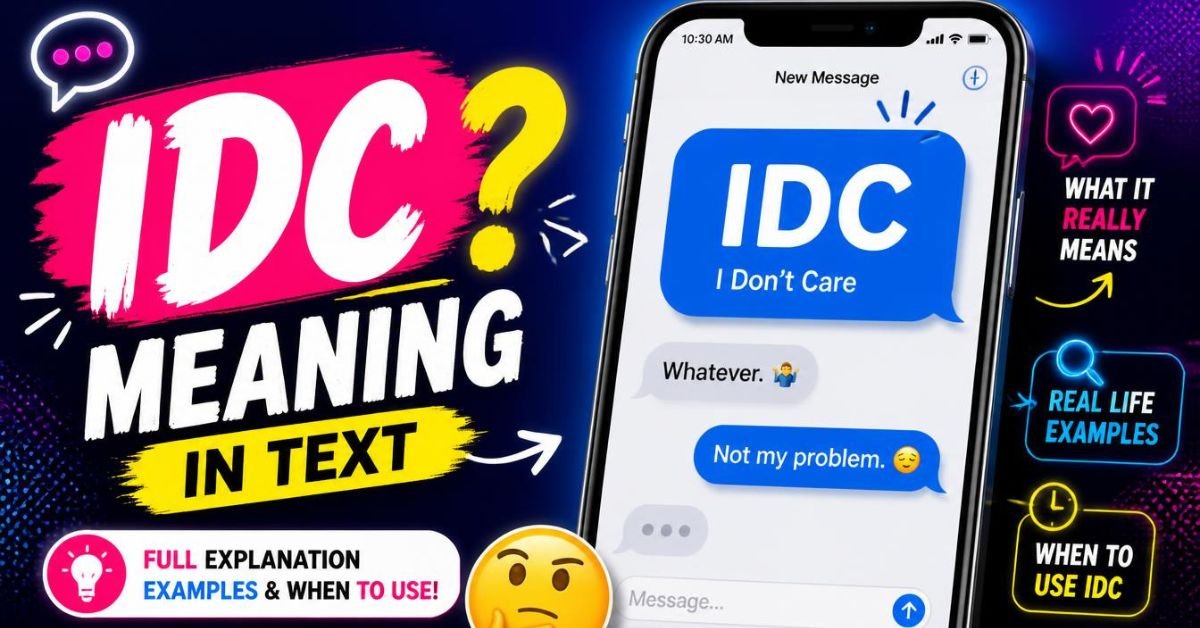
Discover IDC meaning in text, its hidden meanings, uses, examples, replies, and when to avoid it with this simple, complete guide.
IDC meaning in text is simple at first glance: it stands for “I Don’t Care.” People type it to show they have no preference, feel neutral, or want someone else to make the call. But the real meaning of IDC rarely stops there — it shifts depending on tone, timing, the relationship between the two people, and the platform the message was sent on.
In one conversation, IDC can feel warm and easygoing, like a friend happily handing over a decision. In other situations, it may come across as cold, dismissive, or emotionally distant, especially in serious conversations. That’s what makes this abbreviation trickier than it looks — three letters, but a wide range of possible meanings.
This guide breaks down every angle of IDC: where it came from, why people use it, how it plays out across WhatsApp, Instagram, Snapchat, TikTok, and Discord, when it’s positive versus negative, and how to reply when you’re not sure what someone meant.
What Does IDC Mean in Text?
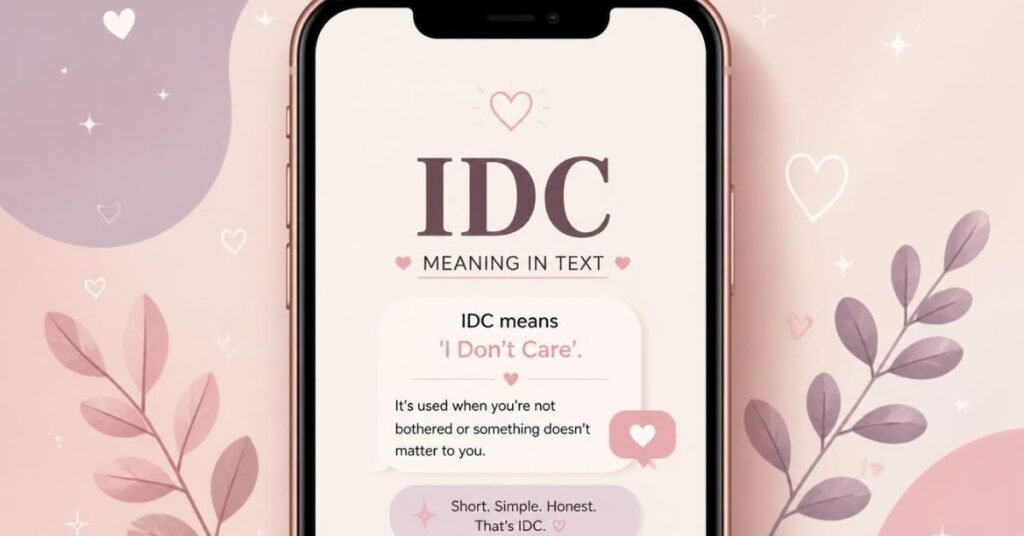
IDC meaning in text usually points to a lack of strong preference rather than disrespect. It’s less about not caring at all, and more about staying neutral.
IDC commonly means:
- I don’t care about the outcome
- Either option is fine
- I have no opinion
- You can decide for me
- The topic isn’t a big deal right now
| Situation | What IDC Usually Means |
| Choosing dinner | Either choice is fine |
| Weekend plans | You decide |
| Casual chat | No strong preference |
| Heated argument | Possible frustration |
Where Did IDC Come From?
IDC grew out of early internet slang, built to save time while typing.
- Popularized in early online chat rooms.
- Spread fast through SMS texting
- Became common across social media platforms
- Still used daily in modern texting culture
Why Do People Use IDC?
Most people don’t type IDC to be rude — they use it because it’s quick.
People use IDC when they:
- Don’t mind either option
- Want the other person to choose
- Feel emotionally tired
- Want to end a discussion
- Prefer short, fast replies
Where Is IDC Used in Everyday Conversations?
IDC shows up wherever people chat online, from casual talks to quick gaming replies.
Common places IDC appears:
- Private chats with friends
- Family group messages
- School or college chats
- Casual workplace messages
- Gaming communities
- WhatsApp, Instagram, Snapchat, TikTok, Messenger, and Discord
Positive Meanings of IDC in Text
In many conversations, IDC simply reflects a laid-back attitude rather than rudeness.
- Shows you’re fine with either option, no real preference either way
- Hands the decision over to the other person without any tension
- Signals trust — you’re comfortable letting them pick
- Comes across as playful or confident, especially with emojis
- Keeps low-stakes plans moving without overthinking small choices
| Message | Positive Meaning |
| “Pizza or tacos?” | Either is fine |
| “Pick the movie” | You choose |
| “Morning or evening?” | No preference |
Negative Meanings of IDC in Text
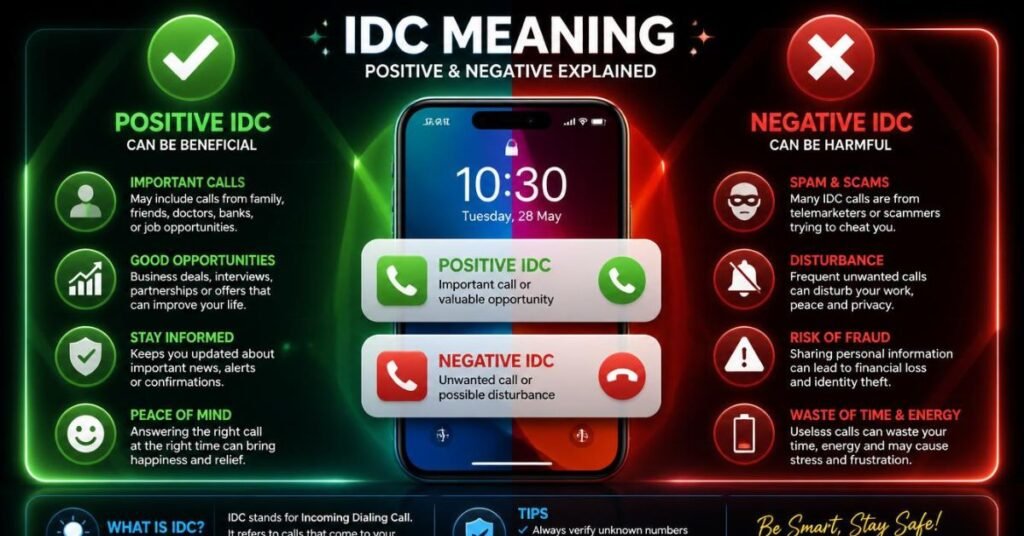
In the wrong moment, the same three letters can feel cold, closed-off, or dismissive.
- Signals indifference toward something that actually matters to the other person
- Cuts a conversation short instead of explaining how you feel
- Can hint at frustration or built-up annoyance
- Creates distance in emotional or personal discussions
- Feels blunt when there’s no emoji, punctuation, or extra words to soften it
| Message | Possible Interpretation |
| “Can we talk?” → “IDC” | Uninterested or upset |
| “Your opinion matters” → “IDC” | Dismissive |
| Mid-argument | Frustrated |
Is IDC Rude? Tone and Context Matter
Whether IDC sounds rude depends on tone, emojis, and the relationship between the two people.
Before judging it as rude, check:
- What’s being discussed
- Whether they’re joking or serious
- If emojis softened the message
- How this person usually texts
- Whether emotions are already high
Quick Tip: Never judge IDC by itself — always read the full conversation.
IDC Meaning Across Social Media Platforms
The core IDC meaning in text stays the same everywhere, but usage style shifts by platform.
| Platform | Common Use |
| Casual planning | |
| Comments and replies | |
| Snapchat | Quick responses |
| TikTok | Sarcastic or confident replies |
| Messenger | Group chat conversations |
| Discord | Gaming and community chats |
What Does IDC Say About the Sender’s Mood?
IDC often reflects emotion more than the literal words suggest.
| Mood | What IDC May Mean |
| Relaxed | Any option is fine |
| Happy | Okay with whatever |
| Tired | Doesn’t want to keep talking |
| Frustrated | Not worth arguing about |
| Angry | Done with the discussion |
| Playful | Used jokingly |
Real-Life Examples of IDC in Text
Context always changes how IDC lands — the same reply can be flexible or hurtful.
| Conversation | Meaning |
| Friend: “Pizza or burgers?” You: “IDC 😊” | Either is fine |
| Parent: “What time?” You: “IDC.” | No preference |
| Friend: “People are talking about you.” You: “IDC 😎” | Confidence |
| Partner: “Can we talk?” You: “IDC.” | May sound hurtful |
How to Reply When Someone Says IDC
There’s no single right answer — it depends on the mood and relationship.
Helpful replies:
- “No problem, I’ll choose this time.”
- “Are you sure either option works?”
- “That’s fine, let me know if you change your mind.”
- “Everything okay? You seem quiet.”
Tip: Assume good intentions first — many people prefer short replies.
If you often come across BTW in conversations, don’t miss our guide on What Does BTW Mean in Text to learn how it differs from IDC and when to use each abbreviation naturally.
Common Situations Where People Say IDC
IDC is fine for everyday messages but can feel insensitive during emotional moments.
Common uses:
- Choosing food or restaurants
- Making weekend plans
- Deciding on a movie
- Family group chats
- Workplace planning
- Gaming chats
- Social media replies
IDC vs Similar Slang Terms
IDC is often confused with other short texting terms, but each has its own meaning.
| Slang | Meaning | Best Used When |
| IDC | I Don’t Care | No preference |
| IDK | I Don’t Know | Unsure about something |
| NVM | Never Mind | Topic no longer matters |
| TBH | To Be Honest | Sharing an honest opinion |
Softer alternatives to IDC: “You choose,” “Either works for me,” “I don’t mind.”
Other Meanings of IDC (Outside Texting)
IDC meaning in text is about “I Don’t Care,” but other industries use the same letters differently.
| Industry | IDC Meaning |
| Business | International Data Corporation |
| Technology | Insulation Displacement Connector |
| Education | Instructional Design Center |
| Texting | I Don’t Care |
Common Mistakes to Avoid When Using IDC
A short reply can easily be misread without tone or facial expressions.
Avoid:
- Using IDC in serious or emotional talks
- Sending it in formal emails
- Ignoring the other person’s feelings
- Replying with just one word when more is needed
Since DMs are one of the most common places where people use IDC, you may also want to read our What Does DM Mean in Text guide to better understand how direct messages work across different social media platforms.
Is IDC Still Popular in 2026?
Yes. IDC remains one of the most recognized texting abbreviations, and it’s still going strong today because:
- It’s short and instantly understood by almost everyone
- It fits fast-paced messaging across every major app
- New slang keeps appearing, but IDC has stayed a staple
- It works across age groups, from teens to adults
- It still gets used daily on WhatsApp, Instagram, Snapchat, TikTok, and Discord
FAQs About IDC Meaning in Text
What does IDC mean in text?
IDC means “I Don’t Care.” It’s usually a quick way of saying you don’t have a strong opinion and you’re fine going along with whatever the other person picks.
Is IDC rude?
Not really, unless the moment calls for something more thoughtful. Sent casually with an emoji, it feels relaxed, but dropped into a serious talk with nothing else attached, it can come off cold.
Does IDC mean something different coming from a girl or a guy?
No, the meaning is the same either way. What actually changes the read is the mood behind it and what was said right before, not who typed it.
Is IDC a positive or negative thing to say?
It can honestly be either. Most of the time it’s just neutral — “you decide, I’m good with it” — but in a tense conversation it can start to feel dismissive.
Should you use IDC at work?
It’s better to skip it in emails or professional chats. It reads as too casual there, so something like “either works for me” gets the same point across more politely.
Conclusion
IDC meaning in text goes beyond the literal words. It technically stands for “I Don’t Care,” but the real message depends on tone, the relationship between the two people, and what was said right before it — the same three letters can feel relaxed in one chat and cold in another. Before reacting, check the context, the emojis, and the mood of the conversation rather than just the abbreviation itself. And if you’re unsure how your own IDC will land, something softer like “you choose” or “I don’t mind” says the same thing more kindly.