Flex Meaning In Text: 20+ Powerful Examples To Decode Every Message
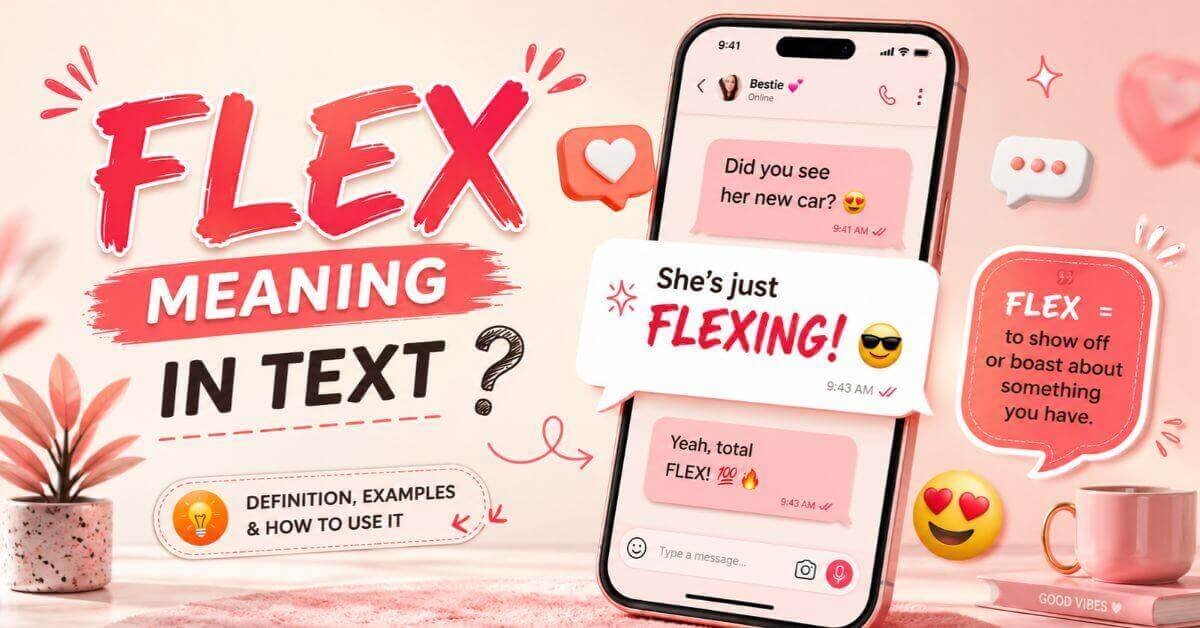
Flex meaning in text explained with examples, slang phrases, and tips to tell whether someone is praising you, teasing you, or showing off.
Flex meaning in text usually refers to showing off an achievement, possession, talent, appearance, or personal success. In texting, someone may use “flex” to praise you, tease you, or point out that you are bragging.
The meaning depends heavily on the message, tone, and relationship between the people talking. If a friend says, “That’s a flex 😂,” they may simply be impressed.
If someone says, “Stop flexing,” they may be playfully or seriously telling you to stop showing off. So, flex is not always positive or negative—it depends on what the sender means by it.
What Does “Flex” Mean in Text?
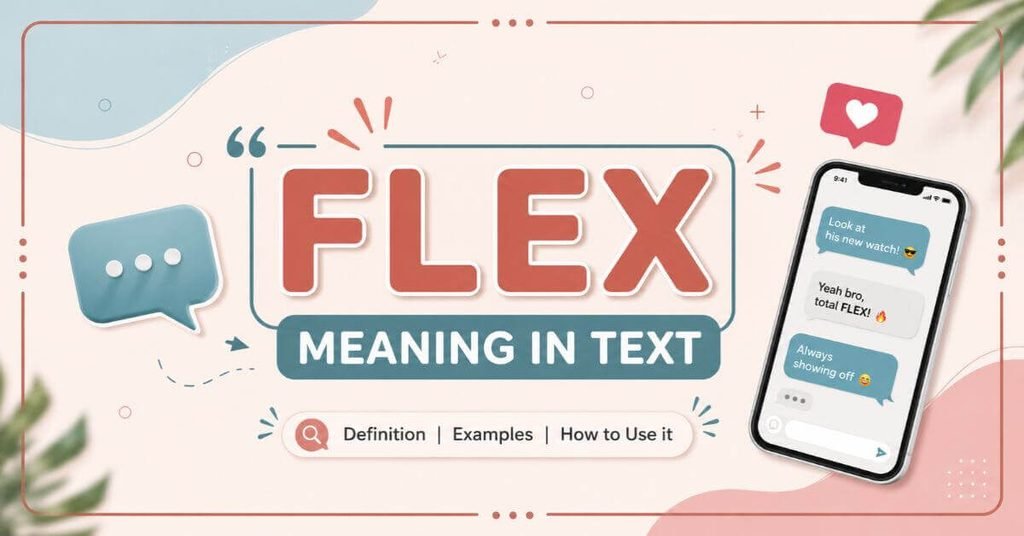
- Flex is informal slang for showing off something that makes you look impressive, successful, skilled, or desirable.
- A person can flex about money, clothes, cars, grades, fitness, achievements, travel, possessions, or personal skills.
- In a text message, flex often means the person wants others to notice something impressive.
- Unlike a straightforward boast, flex can sound playful, casual, or self-aware, especially between friends.
- A person can also flex without directly saying, “Look how impressive I am.”
Takeaway: In texting, flex usually means showing off, but the tone determines whether it feels like praise, humor, or criticism.
How to Tell What Someone Means by “Flex”
- Look at what they are showing or talking about before deciding whether the word is positive or negative.
- Pay attention to emojis, punctuation, and wording because “😂” can comment feel playful rather than critical.
- Consider your relationship with the sender because close friends often use flex as friendly teasing.
- Ask whether the message sounds admiring, joking, competitive, sarcastic, or annoyed.
- The surrounding conversation often tells you more than the word “flex” itself.
Tip: When interpreting flex meaning in text, read the whole message instead of treating the slang word as having only one fixed meaning.
Common Texting Phrases With “Flex”
- “That’s a flex” usually means something is impressive or clearly looks like showing off.
- “Nice flex” can be genuine praise or playful sarcasm depending on the conversation.
- “Big flex” points to something particularly impressive or noticeable.
- “Stop flexing” means stop showing off, although friends may say it jokingly.
- “Not to flex…” signals that the speaker knows what they are about to say may sound like bragging.
- “Weird flex, but OK” is usually a sarcastic reaction to an unusual or unnecessary thing someone is proud of.
Takeaway: These phrases have a similar meaning, but the tone and situation can change how they come across.
Is “Flex” a Compliment or Criticism?
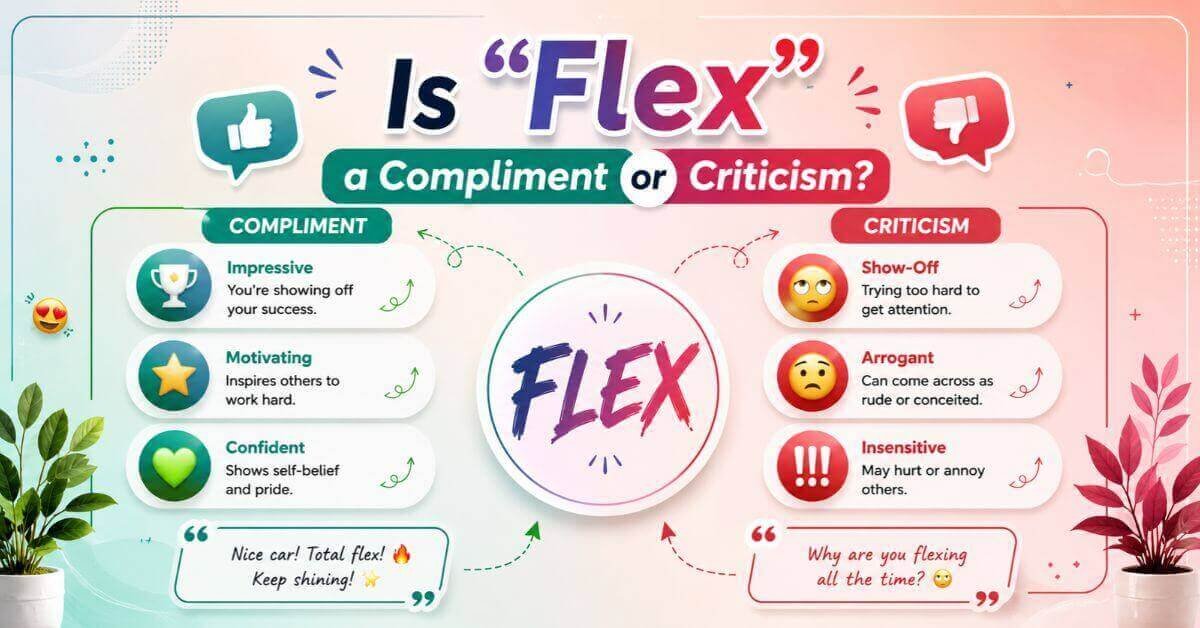
- Positive flex: “That new job is a flex” can show genuine admiration for someone’s success.
- Playful flex: “Okayyy, flex on us 😂” may simply tease a friend who is showing off.
- Critical flex: “Did you really need to show that off?” can suggest the speaker thinks the bragging is unnecessary.
- Sarcastic flex: “Nice flex” may sound complimentary while actually making fun of someone.
- Self-aware flex: “Not gonna lie, this is a little flex” admits that the speaker is showing off.
- The same phrase can therefore feel completely different depending on who says it and why.
Tip: If you are unsure whether someone is praising or criticizing you, check their tone, previous messages, and relationship with you.
Sharing an Achievement vs. Actually Flexing
- Telling friends about a promotion because you are excited is not automatically flexing.
- Repeatedly emphasizing an achievement to appear superior is more likely to be considered a flex.
- Saying something impressive with obvious humor can turn a potential brag into a self-aware flex.
- An accidental flex can happen when someone shares ordinary information that others find surprisingly impressive.
- Intent matters, although people can interpret the same message differently.
Takeaway: Sharing something impressive becomes more like flexing when the message seems designed to attract attention, admiration, or comparison.
Why Do People Flex in Texts?
- Some people flex because they are genuinely proud of an achievement and want to celebrate it.
- Others use flexing as a way to show confidence or establish social status.
- Friends may flex jokingly as part of friendly competition or conversation.
- A flex can also make a conversation more entertaining when the speaker is clearly being humorous.
- Not every flex is about arrogance; sometimes it is simply a playful way of sharing something exciting.
Insight: The reason behind the flex can range from celebration and confidence to competition and attention-seeking.
Low-Key, Humble, and Accidental Flexing
- A low-key flex is a subtle display that does not openly announce, “I am showing off.”
- A subtle flex might involve casually mentioning something impressive without making it the main point.
- A humble flex presents an achievement in a modest-sounding way while still drawing attention to it.
- An accidental flex happens when someone shares something normally, but others perceive it as impressive.
- These forms show why flexing does not always look like obvious bragging.
Tip: If the person seems aware that their message sounds impressive and jokes about it, the flex is often self-aware rather than serious bragging.
What Does “Flex on Someone” Mean?
- Flex on someone means showing off in front of another person or making yourself appear more impressive by comparison.
- “Don’t flex on us” can be a playful response when someone is showing off around friends.
- The expression can involve money, achievements, skills, appearance, possessions, or status.
- The word “on” identifies the person who becomes the target or audience of the display.
- This expression often carries a stronger sense of comparison than simply saying someone is flexing.
Takeaway: “Flex on someone” adds a social target, making comparison or competition more important to the meaning.
Flex vs. Bragging, Showing Off, and Humblebragging
| Expression | Main idea | Typical tone |
| Flex | Display something impressive | Casual, positive, playful, or negative |
| Brag | Talk proudly about yourself or achievements | Often direct |
| Show off | Try to attract attention through something | Often negative |
| Humblebrag | Brag while pretending to complain or downplay it | Often ironic |
- Flex is broader and can describe an object, achievement, skill, or lifestyle display.
- Bragging usually focuses more directly on talking proudly about yourself.
- Showing off can involve behavior rather than words, while flex is common in online and texting language.
- A humblebrag often hides the brag inside a complaint or modest-sounding statement.
- Context separates these expressions more effectively than dictionary definitions alone.
Insight: Flex, bragging, and showing off overlap, but flex is the more casual slang term and can be positive or playful.
Flex in Different Texting Situations
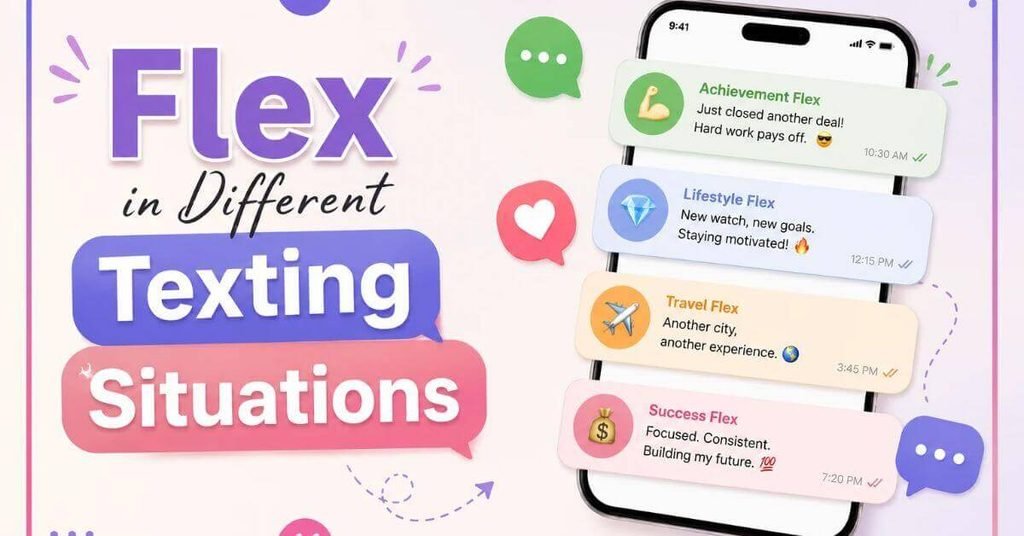
- Between friends: “Okay, flex 😂” is often friendly teasing rather than a serious accusation.
- In a group chat: A flex can invite jokes, admiration, or playful competition from several people.
- In dating texts: Mentioning money, appearance, career success, or lifestyle can sometimes be an attempt to impress.
- In gaming chats: Players may flex rare achievements, rankings, equipment, or impressive skills.
- In social-media comments: People often call expensive purchases, outfits, trips, or accomplishments a flex.
- The closer the relationship, the more likely “flex” can be interpreted as playful rather than hostile.
Tip: Do not assume the same meaning across every situation; the relationship between the people changes how the message lands.
How to Respond When Someone Says “That’s a Flex”
- If they sound impressed, you can reply casually with “Haha, I’m pretty proud of it.”
- If they are teasing you, answer playfully with “Just a little flex 😂.”
- If you want to stay modest, try “Honestly, I just got lucky.”
- If you genuinely were not trying to show off, you can simply say “Haha, I wasn’t even trying to flex.”
- Match their energy instead of assuming that “that’s a flex” is an insult.
Takeaway: A good response depends on whether the sender sounds impressed, amused, sarcastic, or annoyed.
If a friend looks amazing or does something impressive, you might praise them by saying they ate and left no crumbs, rather than saying they are showing off.
The Other Meaning of “Flex”
- In standard English, flex can refer to tightening or bending a muscle.
- It can also relate to something being flexible or capable of adapting.
- These meanings are different from the slang use found in texting and social media.
- If someone says, “Flex your arm,” they are not using the word as internet slang.
- The surrounding sentence tells you which meaning is intended.
Tip: When “flex” appears in a casual message about success, possessions, or status, the slang meaning is usually the relevant one.
Flex Meaning in Text: Quick Reference
| Text phrase | Likely meaning |
| “That’s a flex.” | That is impressive or shows off. |
| “Nice flex.” | You are showing off, possibly playfully. |
| “Big flex.” | That is a major or noticeable display. |
| “Stop flexing.” | Stop showing off. |
| “Not to flex…” | I know this may sound like bragging. |
| “Flex on someone.” | Show off in comparison with someone. |
- Flex meaning in text is usually connected to showing off something impressive.
- “That’s a flex” can be admiration, teasing, or criticism.
- “Not to flex” is often used before a self-aware brag.
- “Flex on someone” introduces comparison with another person.
- Tone and context remain the safest way to understand the intended meaning.
Takeaway: If you remember only one thing, remember this: flex means showing off, but the feeling behind it comes from context.
Someone might share an achievement and confidently say ‘no cap,’ meaning they are being serious or telling the truth. Learn more in our guide to no cap meaning in text.
My Experience With Understanding “Flex” in Text
I have noticed that slang like flex is rarely understood correctly by looking at the word alone. A short message such as “Nice flex” can sound completely different when it comes from a close friend versus someone you barely know. The emojis, previous messages, and subject of the conversation often reveal the sender’s real intention. I also find that people sometimes call something a flex even when the person sharing it was not trying to brag. That is why I think the most useful way to understand the meaning of “flex” in text is to look at the whole conversation. The word itself gives you the basic idea, while the context tells you how seriously to take it.
Frequently Asked Questions
What does flex mean in text?
Flex usually means showing off something impressive, like an achievement, possession, skill, appearance, or success. In a message, it can be positive, playful, sarcastic, or critical depending on the context.
Is flex positive or negative?
It can be either. Someone may use flex as a compliment when they are impressed, or as criticism when they think someone is bragging too much.
What does “that’s a flex” mean?
“That’s a flex” usually means “That is impressive” or “You are showing off.” The phrase can be sincere or teasing depending on the sender’s tone.
What does “not to flex” mean?
“Not to flex” is a self-aware way of introducing something that might sound like bragging. It often means the speaker knows they are about to mention something impressive.
Can flex be a compliment?
Yes. Saying “That’s a flex” can simply show admiration for someone’s achievement, purchase, skill, or success. The surrounding conversation determines whether it is genuine praise or sarcasm.
Conclusion
Flex meaning in text is usually about showing off something impressive, but the word has more nuance than simply “bragging.” It can express admiration, confidence, playful teasing, sarcasm, competition, or criticism. The best way to understand it is to consider the message, tone, intention, and relationship between the people involved. Expressions such as “that’s a flex,” “nice flex,” and “stop flexing” can each carry slightly different feelings. Once you understand those differences, reading flex in texts, chats, and comments becomes much easier. When in doubt, read the conversation around the word—the context usually reveals what the sender really means.