
Poke Meaning On Facebook: 25+ Clear Signs Behind Every Facebook Poke
Poke Meaning on Facebook explained: discover 25+ clear meanings, from friendly greetings and flirting to negative signals, notifications, and what to do next.
Poke Meaning on Facebook is something almost every Facebook user has wondered about at least once. You get a notification, see a name, and aren’t sure whether it’s a joke, a hello, or something more. A poke doesn’t come with a caption, so your brain fills in the blank on its own.
The truth is simpler than it feels: a poke’s meaning on Facebook changes based on who sent it, your history with them, and the moment it lands in your notifications. Some people use it as a running joke, some use it as a quiet hello, and some barely think about it before tapping the button.
This guide breaks down every common reading of a poke, from purely friendly to mildly confusing, so you stop guessing and start understanding what’s actually going on. By the end, the poke meaning on Facebook question should feel a lot less mysterious.
What Facebook Poke Means
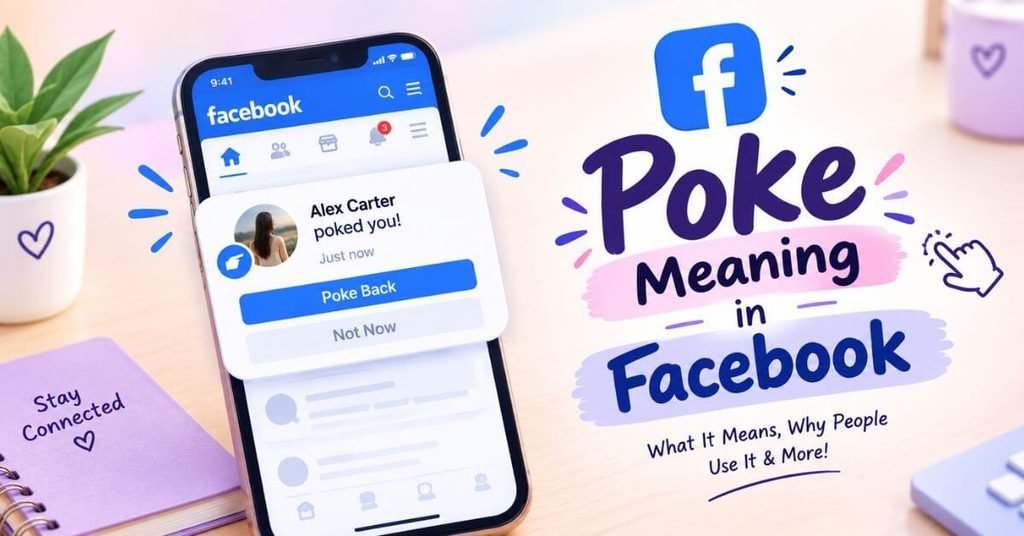
- A Facebook poke is a one-tap way to say “hey” without typing anything.
- It works like a digital nudge rather than a real conversation starter.
- Facebook never gave the poke button an official definition on purpose.
- The meaning of a Facebook poke shifts depending on context, not the button itself.
- Getting poked does not automatically signal romantic interest.
- Your relationship with the sender is the biggest clue to what it means.
- At its core, poke meaning on Facebook always comes back to context.
Takeaway: There’s no fixed rulebook for a poke — the sender and the situation write the definition every time.
Why People Send Pokes on Facebook
- To grab your attention without writing an actual message.
- To send a casual, low-effort hello.
- To reconnect with an old friend after months or years.
- To be playful or tease someone they know well.
- To test whether you’ll notice and respond.
- To feel nostalgic about early Facebook culture.
Tip: If you can’t decide whether to poke or message someone, ask yourself how much effort you actually want the interaction to take.
Different Ways to Interpret a Facebook Poke
- A friendly greeting between people who already talk often.
- A casual way to acknowledge someone’s existence online.
- A playful joke shared between close friends.
- An attention-seeking gesture from someone who wants a reply.
- A reconnection attempt after losing touch.
- A curious, wait-and-see move to check if you’ll poke back.
- Understanding the meaning on Facebook starts with knowing the sender.
Takeaway: The same poke can carry ten different meanings depending on who taps the button, so read the relationship before the notification.
Positive Meaning of a Facebook Poke
- A simple “I’m thinking of you” without needing a full message.
- A light, friendly check-in with no pressure attached.
- An easy way to break the ice before a real conversation.
- A nostalgic gesture from someone reconnecting after years apart.
- A playful inside joke between siblings or close friends.
- A harmless way to say hello during a scroll session.
Tip: A friendly poke usually deserves a friendly response, even if it’s just a poke back — no essay required.
Negative Meaning of a Facebook Poke
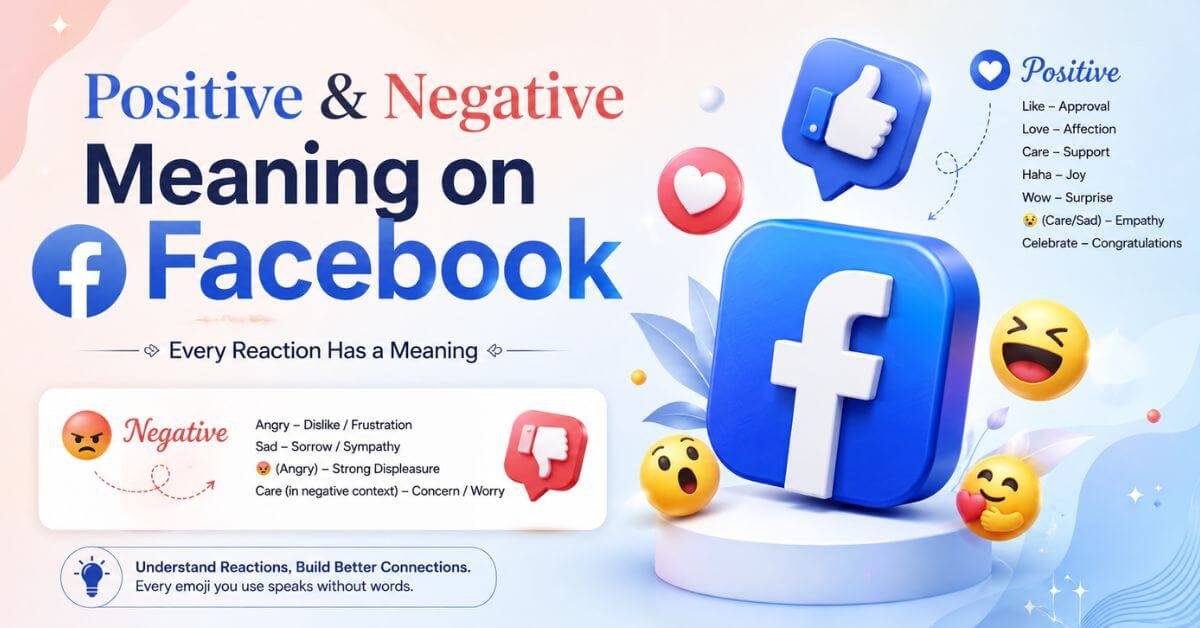
- Repeated pokes from someone you’d rather not hear from.
- A gesture that feels childish or unnecessary to some users.
- Attention you didn’t ask for and don’t want.
- A poke that feels out of place given the relationship.
- Sarcastic or teasing intent that lands the wrong way.
- A single poke is rarely worth overreacting to on its own.
Takeaway: One poke is rarely a red flag — a pattern of unwanted pokes is what actually tells you something’s off.
Poke Between Friends and Family
- Siblings often poke each other purely as a joke.
- Close friends use pokes as a shorthand “hello.”
- Long-distance friendships lean on pokes to stay lightly connected.
- Childhood friends may poke instead of writing a full message.
- Family members sometimes poke instead of a formal greeting.
- These pokes rarely carry hidden meaning beyond familiarity.
Tip: With family and close friends, take the poke at face value — familiarity almost always rules out overanalysis.
Poke From Someone You Barely Know
- It could simply be curiosity about your profile.
- It might be an easy way to test the waters before messaging.
- It’s not automatically a sign of flirting or interest.
- Past interactions, if any, offer the strongest clues.
- A one-time poke from a stranger usually means very little.
- If it feels uncomfortable, you’re not obligated to respond.
Takeaway: A stranger’s poke is curiosity more often than intent — let your comfort level decide whether it deserves a reply.
Facebook Poke Notifications and Visibility
- Poking someone sends them an instant notification.
- You can usually see who poked you inside the Pokes section.
- Facebook still lets you poke a friend back from the same page.
- A running poke count can appear as friends poke each other repeatedly.
- You can dismiss a poke if you don’t want to respond.
- Privacy settings and blocking can limit who is able to poke you.
Tip: Check your privacy settings if pokes from unwanted accounts keep showing up — you have more control than most people realize.
Poking Someone Without Sending a Message
- A poke skips the pressure of finding the right words.
- It signals your presence without demanding a reply.
- It works well when a full message feels like too much effort.
- It’s a lighter alternative to opening with “hey, what’s up?”
- It lets you reach out without starting a real conversation yet.
- It feels more like a tap on the shoulder than a knock on the door.
- It leaves the next move entirely up to the other person.
Takeaway: A poke works best as an opener, not an answer — it starts something without forcing either side to commit.
Facebook Poke vs Message or Like
| Facebook Interaction | Main Purpose | Communication Level | Typical Feeling |
| Poke | Get attention or interact casually | Very low | Playful |
| Like | React to content | Low | Acknowledgment |
| Message | Start a conversation | High | Direct |
| Comment | Respond publicly | Medium | Social/public |
| Reaction | Show an emotion | Low | Expressive |
- A poke is not the same as a Like on a post.
- A poke isn’t meant to replace an actual message.
- Use a Like when reacting to content someone shared.
- Use a message when you actually want to talk.
- Use a poke when you just want to say you noticed them.
- The right choice depends on how direct you want to be.
Tip: Match the tool to the goal — poke to be noticed, like to react, and message when you actually need an answer.
A poke can sometimes be playful, much like other social media expressions such as “ate and left no crumbs” on Instagram.
What to Do After Receiving a Poke
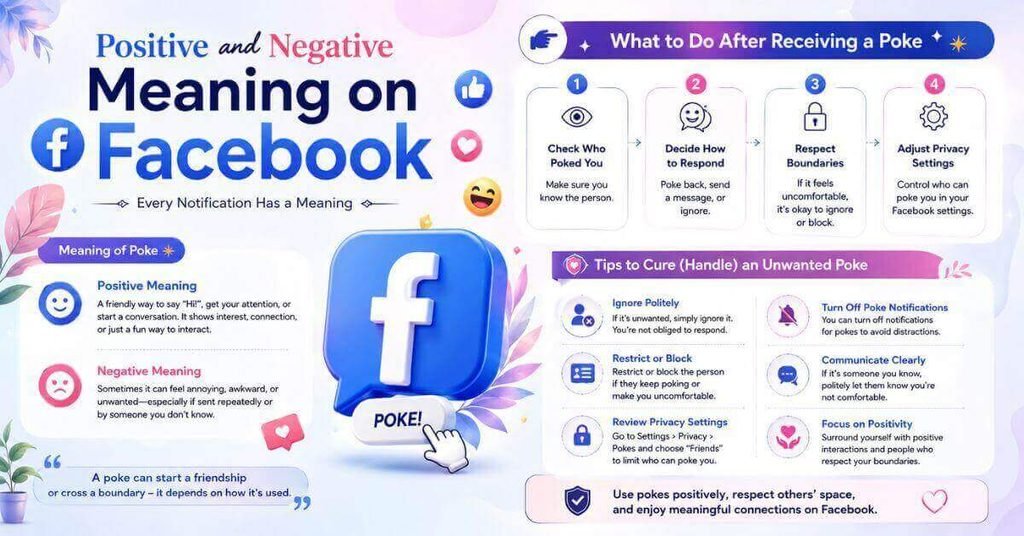
- Poke back if you’re fine keeping things light and playful.
- Send a message if you actually want to start talking.
- Ignore it if you’re simply not interested in responding.
- Think about your relationship before assuming any deeper meaning.
- Don’t jump to romantic conclusions from a single poke.
- Watch for repeated pokes if you’re trying to read someone’s intent.
Takeaway: Your response doesn’t have to match their energy — poke back, message, or move on, whichever feels right to you.
My Experience With Facebook Pokes
I still remember getting poked constantly back when Facebook was new, and honestly, it never meant much more than “I saw you online.” Over the years I’ve been poked by old classmates I hadn’t spoken to in a decade, and every time, it turned out to be nothing deeper than a nostalgic hello. I’ve also poked friends back just to keep a silly streak going, purely for fun, and I’ve noticed that most people don’t overthink it either.
In my experience, the poke meaning on Facebook conversation gets overthought way more than it needs to be. Most of the time, it really is just someone saying hi in the simplest way Facebook allows, and the confusion usually fades once you look at the relationship behind it.
If you want a clearer way to share information, FYI is more direct than a poke. Learn the FYI meaning on Facebook to see the difference.
Frequently Asked Questions
What does a poke mean on Facebook?
A poke is generally a casual way to get someone’s attention or say hello without typing a message. The exact poke meaning on Facebook rarely stays fixed, since it shifts with context and relationship.
Does a Facebook poke mean someone likes you?
It can sometimes hint at interest, especially from someone you already have a connection with. On its own, though, a single poke isn’t reliable proof of romantic feelings.
What does it mean when someone pokes you on Facebook?
It could be friendly, playful, nostalgic, or simply someone testing the waters. Your relationship and past interactions with that person matter more than the poke itself.
Can I poke someone back on Facebook?
Yes, you can poke someone back directly from the Pokes section of Facebook. Doing so is completely optional and carries no obligation.
Can I ignore a Facebook poke?
Yes, you’re never required to respond to a poke. You can simply dismiss it and move on without any consequence.
Conclusion
At the end of the day, a Facebook poke is best understood as a small, low-pressure social signal rather than a hidden message. It can mean friendship, playfulness, curiosity, reconnection, or occasionally a hint of interest, but there’s no single universal answer. The poke meaning on Facebook you’re looking for usually comes down to who sent it, how you already know them, and what happens after.
Don’t read too much into one tap, and don’t ignore a pattern if it keeps happening. If you’re still unsure about the poke meaning on Facebook in your own situation, look at how that person usually talks to you and let that guide your response. When you genuinely want clear communication, a real message will always say more than a poke ever could.
One Comment