
No Cap Meaning In Text: 15+ Slang Uses, Secrets & Real Examples

No Cap Meaning in Text Explained! Discover this popular slang, its real meaning, texting uses, social media examples, and how to respond naturally.
No cap meaning in text trips up a lot of people the first time they see it in a text. If your kid, coworker, or favorite creator dropped “no cap” in a sentence, you probably paused for a second. Here’s the short version: no cap means someone is telling the truth, with zero exaggeration or falsehood attached.
This slang exploded across TikTok, Instagram, and group chats over the last few years, and it’s not going anywhere soon. By the end of this guide, you’ll fully understand the no cap meaning in text and how to use it the right way.
No Cap Meaning at a Glance

- No cap means someone is being 100% honest and sincere
- It’s the opposite of capping, which means lying or exaggerating
- The phrase works as a standalone reply or inside a full sentence
- It adds weight to a claim that might sound unbelievable at first
- You’ll see it most in texting slang, captions, and social media comments
- It comes from AAVE, later spreading through hip-hop culture into Gen Z slang
No Cap Slang Meaning Explained
- The no cap slang meaning works like saying “for real” or “I’m not lying”
- People attach it to a statement to prove they’re being truthful
- It’s often used right after sharing something wild, rare, or hard to believe
- The phrase carries a serious, sincere tone, even in casual texts
- “No cap” pairs naturally with facts, “straight up,” and “no lie”
- It’s short, punchy, and gets the point across without extra words
No Cap in Texting
- No cap in texting shows up constantly in direct messages and group chats
- People type it at the end of a sentence to seal the sincerity
- Short replies like “no cap?” also ask someone to confirm they’re serious
- It fits naturally into informal slang conversations between friends
- Texting slang like this rarely needs extra punctuation or explanation
- The lowercase, casual style matches the relaxed tone of the whole phrase
No Cap Meaning on Social Media
| Platform | How “No Cap” Gets Used |
| TikTok | Captions backing up bold claims or surprising facts |
| Comments confirming a post or story is genuinely true | |
| Snapchat | Quick chat replies stressing honesty in the moment |
| Opinions in threads, adding sincerity during debates | |
| Personal messages between close friends or family |
- The no cap meaning on social media stays consistent across every app
- Creators use it in captions to make outrageous claims feel more believable
- Followers reply with “no cap” to agree strongly with a post
- It shows up in comments, captions, replies, and online conversations alike
- Hashtags built around the phrase help it trend during viral moments
Origins of No Cap
- No cap and its opposite, capping, trace back to African American Vernacular English
- Black slang and street culture used “cap” for lying long before it went viral
- Hip-hop slang carried the phrase into mainstream music and pop culture
- Internet culture and TikTok pushed “no cap” to a massive global audience
- The rise happened mainly between 2018 and 2020, tied to viral video trends
- Language evolution online often recycles older slang for new generations to discover
No Cap in a Sentence
| Example Sentence | What It Signals |
| “I earned straight A’s this semester, no cap” | The claim is genuinely true |
| “This might genuinely be the best burger in the city, no cap” | A sincere, serious recommendation |
| “He really met the artist backstage, no cap” | Confirming a wild story is real |
| “No cap, I studied for six hours straight” | Stressing effort was truly put in |
| “That movie made me cry, no cap” | An honest, unfiltered emotional reaction |
- Seeing no cap in a sentence makes the meaning click faster than any definition
- It usually lands at the end, though some people open with it too
- The tone stays casual, friendly, and easy to say out loud
- It works across topics, from school to food to relationships
Cap vs No Cap
- Cap means a lie, a falsehood, or something made up on the spot
- No cap means the total opposite: complete honesty and truthfulness
- Someone who lies often might get called a capper
- “Stop capping” tells someone to quit lying or exaggerating right now
- “That’s cap” challenges a claim, while “no cap” backs one up
- Knowing this cap vs no cap split helps you read texts correctly
Pros of Using No Cap
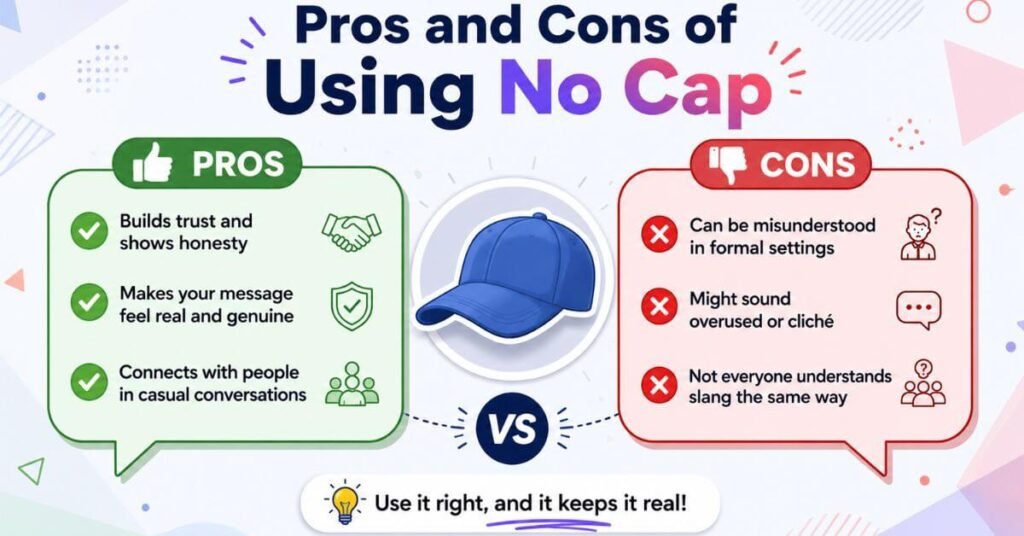
- Adds instant credibility to a claim that sounds hard to believe
- Keeps casual conversation short, punchy, and easy to follow
- Signals sincerity without needing a long explanation
- Fits naturally into texting slang across every major platform
- Helps friends quickly separate facts from exaggeration in a chat
- Builds a fun, shared vocabulary within Gen Z slang culture
Cons of Using No Cap
- Sounds out of place in formal communication like emails or reports
- Loses its impact if overused in every single sentence
- Can confuse non-native English speakers unfamiliar with the slang context
- May come across as unprofessional in a professional setting
- Doesn’t translate well across all age groups or generations
- Relies on tone, so it can be misread in text without context
Related Slang and No Cap Alternatives
- “Straight up” carries the same sincere weight as no cap
- “Facts” agrees with a statement and confirms it’s true
- “For real” and “deadass” both stress genuine honesty
- “No lie” and “no joke” work as close no cap alternatives
- These slang expressions rotate in popularity but share one goal: proving truth
- Mixing them into conversation keeps your slang usage feeling natural, not repetitive
Formal vs Informal Use
- No cap belongs in texts, DMs, and casual hangouts with friends
- Skip it in academic writing, job interviews, or professional communication
- A casual setting like a group chat welcomes the phrase easily
- A professional setting like a work email does not fit the tone
- Reading your audience matters as much as knowing the definition
- Matching context and tone keeps the slang landing the way you want
Common Mistakes With No Cap
- Some people confuse “no cap” with simply agreeing, when it actually stresses honesty
- Non-native English speakers often miss the sincerity baked into this slang context
- Older generations sometimes mix up “cap” with wearing a hat, not lying
- Dropping “no cap” into every single sentence waters down its real impact
- People forget it flips meaning entirely once you remove the word “no”
- Mixing it into a formal communication setting can read as unprofessional
Social media slang can vary by platform, especially when you’re trying to understand what someone means in a comment or message. If you’re also exploring Facebook terms, check out our guide to what restricted means on Facebook to understand how Facebook uses “restricted” differently from everyday slang.
How to Respond to No Cap
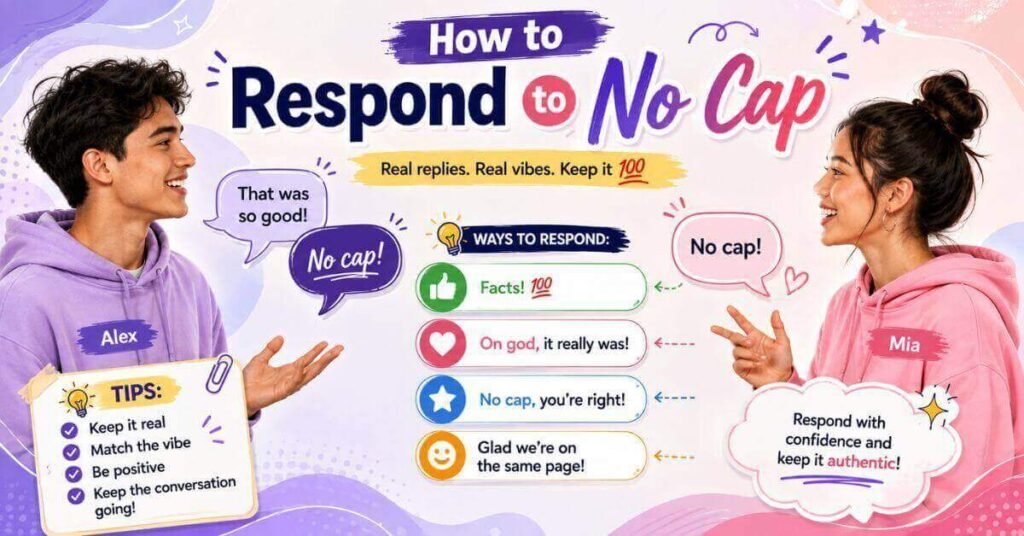
| Response | What It Means |
| “No cap, fr fr” | Doubling down on total sincerity |
| “Deadass?” | Asking someone to confirm they’re serious |
| “Facts” | Agreeing the statement is true |
| “I believe you” | Accepting the claim without pushback |
| “Stop capping” | Pushing back if the claim still sounds fake |
- These slang responses keep an online conversation moving naturally
- Picking the right reply depends on how believable the original claim sounded
- Friends often mix a few of these for emphasis in one message
My Experience With No Cap
I first noticed “no cap” everywhere in comment sections a few years back. It took a family dinner with my younger cousin for it to finally click. Now I catch myself using it in casual texts without even thinking twice. It felt awkward at first, then became second nature after hearing it enough. That’s honestly how most internet slang works its way into daily conversation
If you’re comparing phrases that emphasize honesty or agreement, FR meaning in text is another useful slang term to know. “FR” usually means “for real” and can express agreement, sincerity, seriousness, or surprise depending on the context.
Frequently Asked Questions
What does “no cap” mean in a sentence?
“No cap” means someone is telling the truth, with zero exaggeration. It’s a casual way to say, “I’m serious” or “I really mean it.”
Is “no cap” the same as saying facts?
Yes, pretty much. Both confirm a statement is true, though “facts” agrees with someone else’s claim while “no cap” backs up your own.
Where did “no cap” come from?
It traces back to AAVE and Black culture, later spreading through hip-hop slang and TikTok into everyday Gen Z slang worldwide.
Can I use “no cap” at work or in emails?
It’s best to avoid it in formal communication like emails or reports. Save it for casual conversation with friends instead.
What’s the opposite of “no cap”?
The opposite is simply “cap,” meaning a lie. “Capping” describes the act of lying or exaggerating itself.
Final Takeaway
At its core, the no cap meaning boils down to one simple idea: real, unfiltered honesty. Once you know the difference between capping and no cap, you’ll spot it everywhere, from TikTok captions to late-night group chats. It’s a small phrase, but it carries real weight in how people talk online today.


3 Comments