HBU Meaning In Text: 15+ Useful Uses, Replies & Real Examples

HBU meaning in text explained with 15+ uses, examples, replies, tone, comparisons, and alternatives for easy texting and chat.
HBU simply means “How About You?” in text messages and usually appears in casual conversations. If someone says, “I’m having a great day, HBU?” they’re simply asking how your day is going. This HBU abbreviation helps people keep conversations moving without typing a full sentence.
You’ll commonly find it in texts, DMs, social media chats, and group messages. However, the meaning can feel slightly different depending on the tone and surrounding message. Below, you’ll find the meaning, examples, pros and cons, replies, alternatives, and other uses.
HBU Meaning in Text
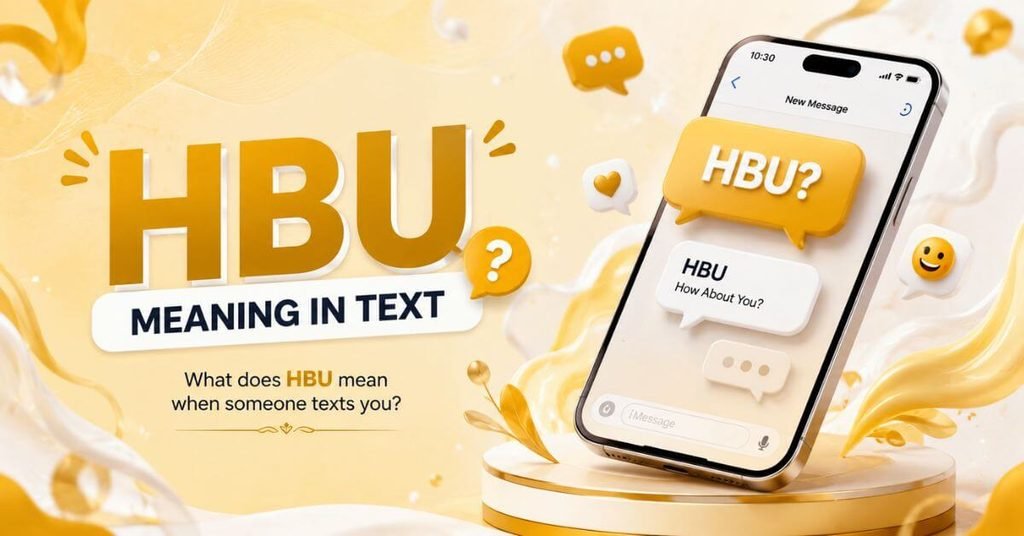
- HBU meaning is “How About You?”, a common chat abbreviation used after someone shares information about themselves.
- The HBU full form turns a longer question into a quick, casual abbreviation that works well in fast-moving conversations.
- In simple terms, the HBU text meaning is “I answered about myself; now tell me about you.”
- The HBU text abbreviation often appears after updates about someone’s day, mood, plans, food, work, school, or weekend.
- As texting slang, HBU saves time while still giving the other person an easy opening to respond.
Takeaway: When you see HBU in a normal message, read it as How About You?
| Term | Meaning | Typical Setting |
| HBU | How About You? | Casual texting |
| WBU | What About You? | Casual chats |
| HBY | How About You? | Less common texting |
| HRU | How Are You? | Casual check-ins |
HBU in Texting and Chat
- HBU in texting appears frequently in text messages, DMs, and relaxed conversations between people who already know each other.
- You may encounter HBU in chat on WhatsApp, Instagram, Snapchat, iMessage, TikTok, and other messaging platforms.
- In HBU conversations, the sender usually shares their own answer first before using the abbreviation.
- It works especially well in casual texting because the message feels quick without sounding overly stiff.
- Friends may use it in group chats, while classmates and familiar coworkers may use it during informal conversations.
Takeaway: HBU belongs naturally in online chats where speed and informality matter.
HBU Tone and Context
- The HBU tone usually feels casual, friendly, curious, or conversational rather than serious or formal.
- HBU context matters because “hbu?” can feel warm in one conversation but come across as slightly dry in another.
- A positive meaning often appears when HBU follows a thoughtful update, emoji, joke, or friendly question.
- A possible negative meaning can emerge when someone replies only “hbu” after you shared something emotional or important.
- The surrounding words create the tone and context, so HBU alone shouldn’t be treated as a hidden romantic signal.
Takeaway: Judge the entire message instead of reading too much into three letters.
HBU Examples in Real Conversations
- HBU real-life examples: “I’m finally done with work. “HBU?” naturally encourages the other person to share their own update.
- Friend: “I’m staying home tonight. HBU?” — Reply: “Same here, probably watching a movie.”
- Instagram: “This playlist is actually amazing. HBU?” — Reply: “Same! I’ve had it playing all afternoon.”
- Dating chat: “My day was pretty hectic. HBU?” — Reply: “Mine was busy too, but it ended well.”
- Group chat: “I’m grabbing coffee before class. HBU?” — Reply: “I’m already on campus.”
Takeaway: These HBU examples show how the shortcut naturally passes the conversation to someone else.
Pros and Cons of Using HBU
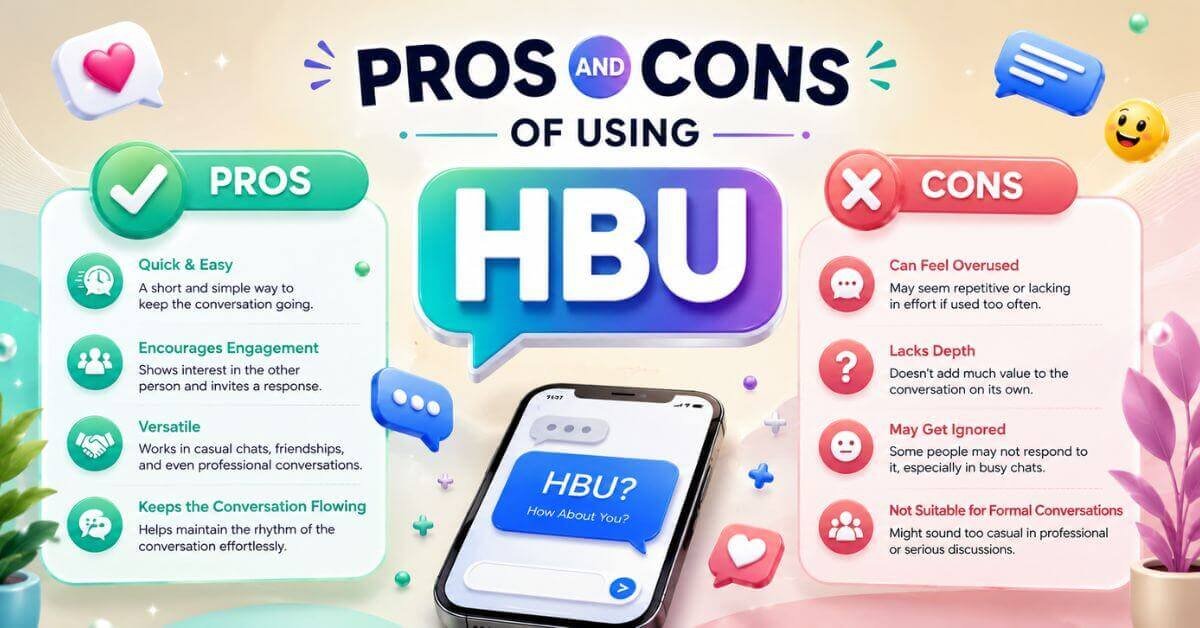
- Pros: HBU is brief, convenient, easy to understand, and useful for keeping a conversation moving.
- Pros: This conversational shortcut encourages reciprocity because it lets you turn a question back naturally.
- Pros: It works well when you want to keep the conversation going without repeating a complete sentence.
- Cons: HBU can feel lazy or abrupt when someone expects a thoughtful answer to a serious message.
- Cons: It doesn’t belong in formal writing, important emails, academic work, or most forms of professional communication.
Takeaway: HBU works best when the conversation itself is relaxed and informal.
HBU From a Girl or Guy
- HBU from a girl generally means the same thing as HBU from anyone else: How About You?
- HBU from a guy also carries the same basic meaning, even when the surrounding conversation feels playful or personal.
- In a flirty context, HBU may help continue the conversation, but the abbreviation itself doesn’t prove romantic interest.
- A friendly tone may suggest genuine curiosity when HBU follows a personal update or thoughtful response.
- If someone replies only “hbu?” to a serious message, it may seem a little disengaged depending on the context.
Takeaway: Look at the complete conversation rather than assuming meaning based on gender.
HBU Replies and Responses
- To respond to HBU, simply answer the implied question honestly, just as you would during a face-to-face conversation.
- Simple HBU replies include “I’m doing good,” “Pretty tired today,” or “Not bad, just relaxing.”
- To reply to HBU and continue chatting, add a follow-up such as “I’m good! What are you doing later?”
- If you want a warmer response, give one small detail instead of sending another one-word message.
- For HBU response examples, “I’m having a great day so far. Just finished lunch. How about you?” sounds natural and open.
Takeaway: Answer first, then add a detail or question if you want the conversation to continue.
HBU vs WBU vs HBY
- HBU, WBU, and HBY perform nearly the same conversational job, although their wording and popularity can differ.
- HBU stands for “How About You?” while WBU means “What About You?” and can be used in much the same way.
- HBY can also represent “How About You?” It’s less common in everyday texting slang.
- Similar texting abbreviations such as WBU may feel just as natural depending on someone’s personal texting habits.
Takeaway: Choose the version that feels natural to your usual texting style.
HBU Combinations and Variations
- Common HBU usage includes “I’m good, hbu?” “Doing well, hbu?” and “Just chilling, hbu?”
- You may see HBU combined with WYD, HRU, or SUP when someone asks several casual questions in one conversation.
- HBU capitalization can appear as “HBU,” “Hbu,” or “hbu,” with lowercase often feeling more relaxed.
- HBU punctuation is flexible, so “hbu?” is clearer, while “hbu” feels more casual.
- Emojis, extra words, and punctuation can soften the message, making a short HBU feel warmer and more inviting.
Takeaway: Small details around HBU can change the rhythm and feel without changing its basic meaning.
HBU Usage and Etiquette
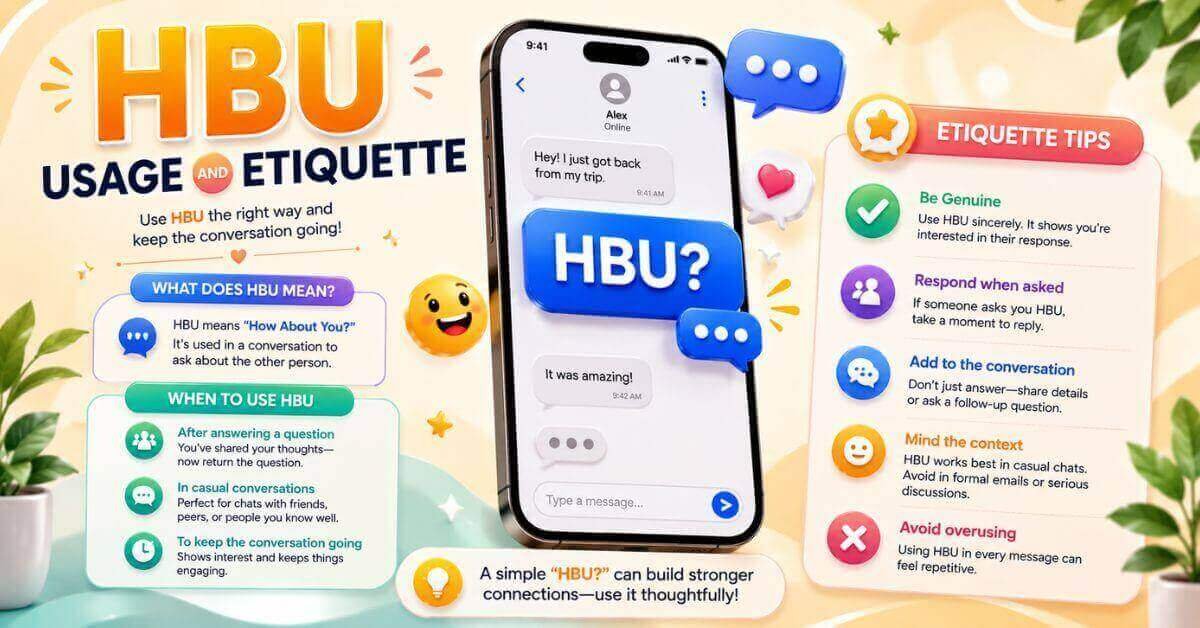
- Use HBU in a casual setting with friends, family, classmates, or people you already chat with comfortably.
- HBU fits social media chats, casual DMs, informal group chats, and everyday digital conversations.
- Avoid it in professional communication, job applications, formal workplace messages, or important business correspondence.
- It also doesn’t belong in academic writing, research papers, formal reports, or other serious written work.
- When someone shares painful news, a complete response usually feels more considerate than simply sending “hbu?”
Takeaway: Think about your relationship with the reader before choosing an informal abbreviation.
HBU Alternatives in Texting
- HBU alternatives include “How about you?” “What about you?”, and the simple “And you?”
- “How are you doing?” is better when you want to show genuine interest rather than simply keep the conversation going.
- “What are your plans?” works when you’re asking about someone’s activities rather than returning the same question.
- Natural alternatives can sound warmer when the topic is personal, emotional, or slightly more serious.
- In formal situations, write the complete phrase instead of relying on internet slang or a chat abbreviation.
Takeaway: Choose your wording based on the relationship, topic, and level of formality.
HBU Meaning in Urdu
- The HBU meaning in Urdu can be expressed naturally as “آپ کا کیا حال ہے؟” in a polite context.
- With close friends, “تمہارا کیا حال ہے؟” can convey the same basic idea more informally.
- In Urdu-English texting, people may still write “HBU?” because English abbreviations are common in digital conversations.
- The intended meaning remains How About You?, even when the surrounding conversation switches between Urdu and English.
- The exact Urdu wording can change according to familiarity, respect, and the relationship between the speakers.
Takeaway: HBU keeps its core meaning across bilingual conversations, while the Urdu phrasing changes with context.
If you use HBU in WhatsApp conversations, you may also come across features that affect how chats appear and stay private. Chat Lock on WhatsApp protects selected conversations, so it’s useful to understand how privacy features can change what you see in your chats.
Other Meanings of HBU
- HBU has other meanings that exist outside texting, so context becomes important when you encounter the abbreviation elsewhere.
- In real estate, Highest and Best Use describes the use of a property that meets relevant requirements and supports a valuation analysis.
- An HBU business meaning may therefore relate to property, land use, appraisal, or financial analysis rather than casual messaging.
- The HBU finance meaning can appear in discussions involving property valuation and investment decisions.
- The HBU university meaning may refer to Houston Baptist University, now known as Houston Christian University.
Takeaway: If HBU appears outside a conversation, check the surrounding subject before assuming it means “How About You?”
My Experience With HBU
I’ve noticed that HBU usually appears when a conversation needs a small nudge forward. Someone shares a quick update, then uses HBU to hand the spotlight back. That tiny shortcut can make an ordinary chat feel more balanced and natural. However, I’d avoid using it when someone has opened up about something serious. In those moments, a complete response shows more attention and genuine interest. For everyday texting, though, HBU remains one of the easiest conversation shortcuts to understand.
HBU is just one of many abbreviations commonly used in casual texting. If you’ve also seen WTV in a text, its meaning can change with the tone and context, so knowing the difference helps you read short replies more accurately.
HBU Frequently Asked Questions
What does HBU mean in text?
HBU means “How About You?” It’s a casual abbreviation people use after sharing their own answer, update, opinion, or experience.
Is HBU formal or informal?
HBU is informal. It works well in casual texting and social media conversations, but the full phrase is safer for professional or academic communication.
Is HBU rude in texting?
No, HBU isn’t rude by itself. However, replying with only “hbu?” after a serious message can sometimes come across as short or dismissive.
What should I reply to HBU?
Answer the implied question naturally. For example, you could say, “I’m doing pretty well, just relaxing tonight.”
What is the difference between HBU and WBU?
HBU means “How About You?” while WBU means “What About You?” Both usually serve the same purpose in casual conversations.
Conclusion
Once you understand HBU meaning In text, those three letters become much less mysterious. HBU simply means “How About You?” and is commonly used in casual online conversations. It’s useful when you want to respond while inviting the other person to share too. Just remember that tone depends heavily on the surrounding words and situation. For formal settings, writing the complete phrase will usually sound more polished. When the conversation is casual, however, a simple “hbu?” can keep things moving effortlessly.