
What Does “Bump” Mean On Facebook? 15+ Powerful Ways To Bump Posts
What does “bump” mean on Facebook? Learn how bumping works, how to use it, Messenger meaning, etiquette, and mistakes to avoid.
What does “bump” mean on Facebook? It usually means bringing an older post back to people’s attention by adding fresh activity, often through a comment. The term is especially common in Facebook Groups, community discussions, and buy-and-sell groups where posts can quickly move down the feed.
If you’re wondering what does “bump” mean on Facebook, the simple answer is that users use it as a reminder or attempt to revive an older post. It isn’t an official Facebook feature called “Bump.” Instead, it is common social media slang that developed among users.
This guide explains what does “bump” means on Facebook, how people use it, what it means in Messenger, and which bumping practices are helpful or annoying.
Bump Meaning on Facebook
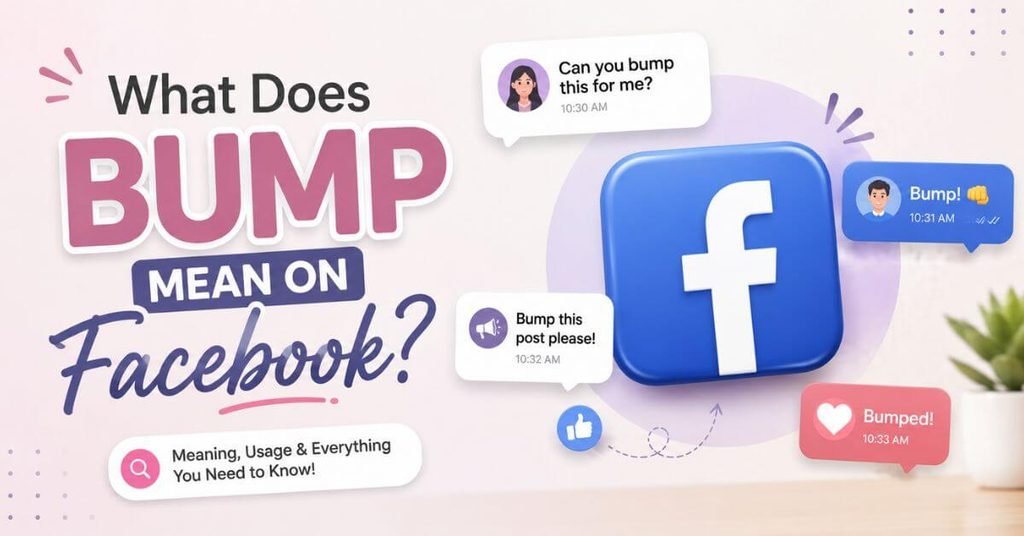
- Bump meaning on Facebook usually refers to bringing an older post back to attention.
- Users commonly write “BUMP” in the comments of their own post.
- The practice is especially common inside Facebook Groups.
- “Bring Up My Post” is a common interpretation of BUMP, but it is user slang rather than an official Facebook definition.
- A bump creates new activity, but it does not guarantee that everyone will see the post.
Tips & Takeaways:
Think of a bump as a reminder rather than a guaranteed ranking trick. Use it when the original post is still useful and relevant. A meaningful update is usually better than repeating “BUMP.”
Bump Meaning in Messenger
- What does “bump” mean on Facebook can be slightly different when people talk about Messenger.
- In a Messenger conversation, “bump” usually means reminding someone about an unanswered message.
- A person may send “bump” when they want the other person to respond.
- It works more like a casual follow-up than a way to increase post visibility.
- Messenger bumping happens in a private conversation rather than a Group feed.
Tips & Takeaways:
Use a friendly reminder when someone may have missed your message. Avoid sending repeated reminders within a short period. Remember that Messenger and Facebook Group bumping serve different purposes.
How Bumping a Facebook Post Works
- What does “bump” mean on Facebook in practice? It means adding activity to an older post so people may notice it again.
- A new comment or reply makes the discussion more recent.
- Other members may see the renewed activity depending on how their feed is organized.
- Facebook does not guarantee that a bumped post will appear at the top for everyone.
- A bump can help start a conversation again, but it is not a guaranteed visibility shortcut.
Tips & Takeaways:
Fresh, useful interaction is more valuable than empty activity. Do not assume every bump automatically moves a post to the top. Results can differ from one Facebook user to another.
Ways to Bump a Facebook Post
- Add a useful comment that gives readers new information.
- Reply to an existing comment instead of posting the same message again.
- Add an update if something about the original post has changed.
- Ask a relevant follow-up question to encourage genuine discussion.
- Share the post with people who are actually interested in its topic.
Tips & Takeaways:
The best answer to what “bump” means on Facebook is not simply “write BUMP.” A useful update gives people a reason to revisit the post. Always consider the Group’s rules before bumping.
Bumping Without a New Comment
- You do not always need to repeat “BUMP” to bring attention back to a post.
- Replying to an existing discussion can create useful new activity.
- Adding accurate information can make an older post relevant again.
- Sharing the post can introduce it to another suitable audience.
- Group admins may use a pinned post when they need important information to remain easy to find.
Tips & Takeaways:
Useful updates are better than repetitive comments. Pinning is different from ordinary user bumping. Choose the method that best fits the purpose of your post.
Facebook Algorithm and Post Visibility
- What does “bump” mean on Facebook does not mean that a comment controls Facebook’s entire algorithm.
- Facebook uses personalized systems to determine what content people see.
- Different users can see different posts based on their activity and interests.
- Relevance and meaningful engagement matter more than simply repeating a word.
- A bump should therefore be viewed as renewed activity, not a guaranteed algorithm hack.
Tips & Takeaways:
Never promise that bumping will place a post at the top of everyone’s feed. Focus on genuine interaction rather than trying to manipulate visibility. Keep your content useful for the people who may see it.
Good Ways to Bump Posts
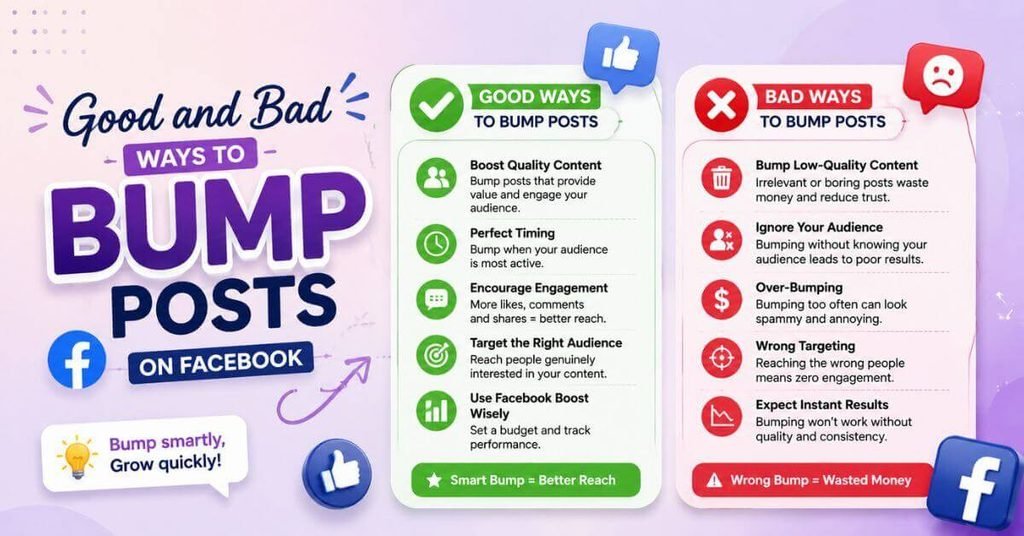
- Add a genuine update about the product, question, event, or topic.
- Answer a question that another Group member has asked.
- Reply naturally when someone comments on your original post.
- Mention important information that was missing from the first post.
- Ask a specific question that encourages useful responses.
Tips & Takeaways:
Good bumping gives readers a reason to return to the conversation. Useful information is more valuable than repeated “BUMP” comments. Follow the culture and rules of each Facebook Group.
Bad Ways to Bump Posts
- Posting “BUMP” repeatedly within a short period.
- Creating several empty comments just to make a thread look active.
- Bumping an outdated post that is no longer useful.
- Ignoring Group rules about promotional or repetitive content.
- Trying to make every post visible through constant activity.
Tips & Takeaways:
Repetitive bumping can frustrate other members. Avoid treating bumping as a guaranteed ranking technique. If a post needs constant bumping, consider improving the original content.
Bump Etiquette on Facebook
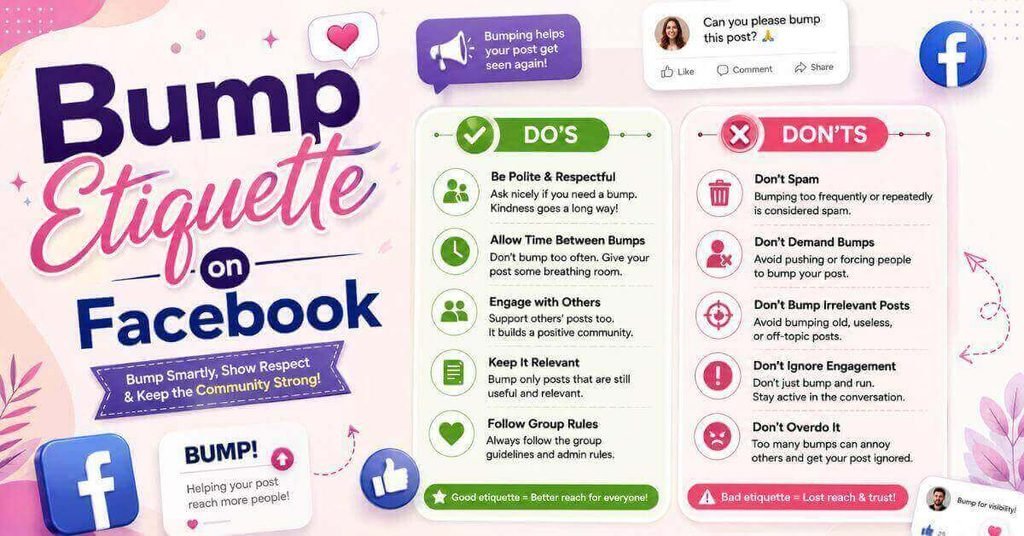
- Check the Group’s rules before bumping any post.
- Give your post reasonable time before adding another update.
- Avoid bumping several times when nobody is responding.
- Keep every new comment relevant to the original topic.
- Respect moderators if they ask you to stop bumping.
Tips & Takeaways:
Good etiquette protects the quality of a Facebook Group. One useful update is usually better than multiple empty comments. Respect the community instead of focusing only on visibility.
Paid Boosts vs Organic Bumps
- A bump is generally a free user action that adds activity to an existing post.
- A Facebook boost is a paid advertising option.
- Bumping depends on organic interaction such as comments, replies, and shares.
- A bump is more suitable for ordinary Group discussions.
- Businesses may use paid promotion when they need broader advertising reach.
Tips & Takeaways:
Bump and boost are not the same thing. A bump does not require an advertising budget. A boost is designed for paid promotion rather than ordinary Group interaction.
Bump Features on Facebook and Messenger
- What does “bump” mean on Facebook depends partly on where you see the term.
- In Groups, bump usually refers to renewing attention around an older post.
- In Messenger, bump is commonly used as a casual reminder about an unanswered message.
- Facebook’s interface and available features can change over time.
- The word “bump” itself should not be confused with an official universal Facebook button or feature.
Tips & Takeaways:
Always consider the context when you see “bump.” Group bumping and Messenger reminders are not identical. Avoid assuming an older tutorial still matches today’s Facebook interface.
Facebook users often use short slang expressions in comments and posts. If you have also seen phrases such as “no cap,” you can learn more about its meaning in our guide to no cap meaning in text.
Removing or Managing Bump Messages
- You can remove your own Facebook comment if you no longer want it on a post.
- Editing a comment may be useful when the information has changed.
- Messenger messages have their own message-management options.
- Comments and private Messenger messages are handled separately.
- Removing repetitive comments can make a discussion easier to follow.
Tips & Takeaways:
Clean up unnecessary bump comments when they no longer serve a purpose. Check whether you are managing a Facebook comment or Messenger message. Avoid posting repeated bumps that you may later need to remove.
Common Bump Mistakes
- Assuming every bump automatically increases a post’s ranking.
- Confusing an organic bump with a paid boost.
- Posting “BUMP” several times without adding value.
- Ignoring the rules of a Facebook Group.
- Bumping posts that are outdated or no longer relevant.
Tips & Takeaways:
What does “bump” mean on Facebook should never be interpreted as “guaranteed top ranking.” Bumping can create renewed activity, but results vary. Strong content and genuine conversations remain more useful than repetitive comments.
My Experience With Bumping on Facebook
A practical experience with bumping shows that simply writing “BUMP” does not always bring meaningful attention. An older sales or discussion post may remain unnoticed even after a simple bump. Adding a useful update can give people a stronger reason to read the post again. Replying to an existing question often feels more natural than creating empty comments. This is why what does “bump” means on Facebook is better understood as renewed attention rather than guaranteed reach. The most effective approach is to add something useful while respecting the Group’s rules.
If you are still learning Facebook abbreviations, you may also want to understand FYI meaning on Facebook before using unfamiliar terms in posts or comments.
Frequently Asked Questions
What Does “Bump” Mean on Facebook?
What does “bump” mean on Facebook? It usually means bringing an older post back to people’s attention through new activity, often a comment. It is especially common in Facebook Groups.
What Does BUMP Stand for on Facebook?
BUMP is commonly interpreted as “Bring Up My Post.” However, this is user-created slang rather than an official Facebook term.
How Can You Bump a Post on Facebook?
You can add a relevant comment, reply to an existing comment, or provide a useful update. If the Group permits it, you can also use a simple “BUMP” comment.
Does Bumping a Facebook Post Work?
Bumping can bring renewed attention to an older post, but it does not guarantee that the post will appear at the top of everyone’s feed. Results depend on the context and audience.
What Does “Bump” Mean on Facebook Messenger?
In Messenger, “bump” usually means sending a casual reminder about an unanswered message. It is different from bumping a Facebook Group post.
Conclusion
What does “bump” mean on Facebook? In simple terms, it means trying to bring an older post back to people’s attention through fresh activity. The practice is especially common in Facebook Groups where discussions can move down quickly.
If you understand what does “bump” mean on Facebook, you can use it more appropriately. Add useful information, reply naturally, follow Group rules, and avoid repetitive comments.
A bump can help restart attention around a relevant post, but it is not a guaranteed way to manipulate Facebook’s feed. Genuine engagement and useful conversations are a better long-term approach.

One Comment