
WTV Meaning In Text: 15+ Powerful Meanings & Uses You Need To Know
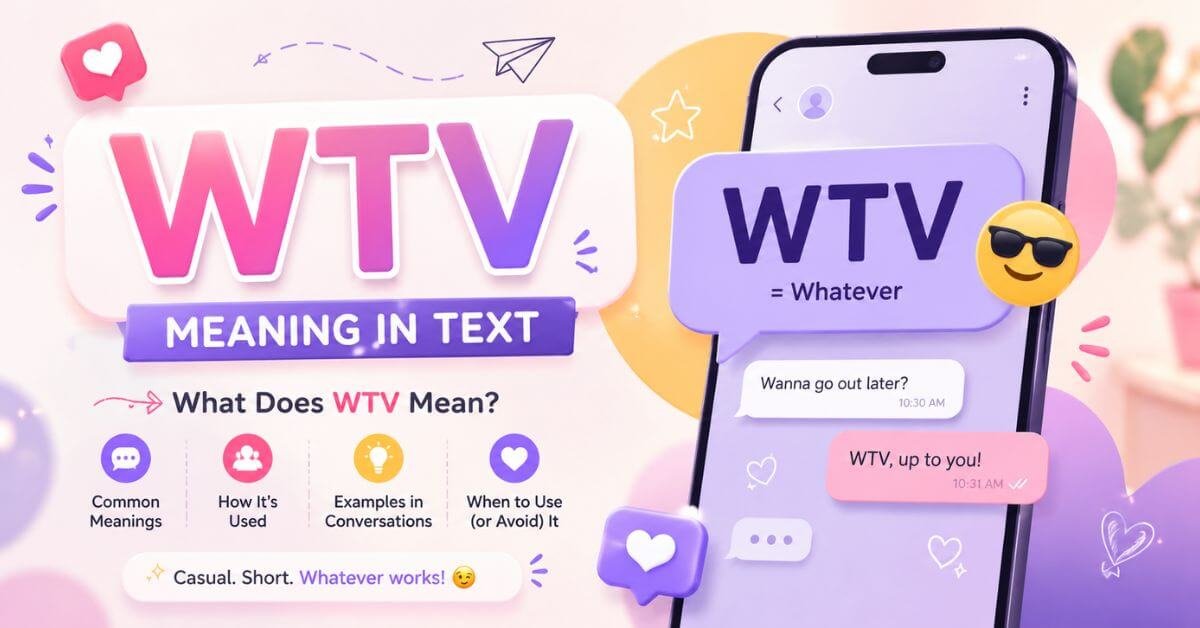
WTV meaning in text explained with 15+ powerful meanings, real examples, tone, uses, replies, and tips for understanding every WTV message.
WTV meaning in text usually comes up the moment someone gets a short, clipped reply and can’t tell if the other person is being casual or cold. You send a question, wait a few minutes, and all you get back is “WTV” — no punctuation, no emoji, nothing to go on.
That single word can mean “I’m easygoing about this” or “I’m annoyed and done talking,” and the letters alone won’t tell you which. Most of the time, WTV simply means “whatever,” but its emotional weight depends entirely on the conversation around it.
This guide breaks down what WTV really means, how tone changes its meaning, and how to reply without overthinking every text you get.
WTV Meaning in Text
- WTV means “whatever” in nearly every casual texting context.
- It’s used to show indifference, flexibility, or a genuine lack of preference.
- It can mean “anything is fine” when someone doesn’t want to choose.
- It can mean “up to you” when someone is fine following your lead.
- It can also mean “I don’t really care,” which isn’t always negative.
- The same three letters shift from friendly to cold depending on what came before them.
WTV Full Form and Meaning
- WTV stands for “whatever” — a shortened version, not a different word.
- People shorten it to keep fast-paced digital conversations moving quickly.
- It fits naturally into texting shorthand, DMs, and internet slang overall.
- WTV differs slightly from “whatever you want” or “whatever works” in tone.
- The surrounding sentence decides which of those meanings actually applies.
- Example: “WTV” = whatever, “WTV works” = whatever works, “WTV you pick” = whatever you pick.
Positive Meanings of WTV
- WTV isn’t automatically negative — plenty of uses are lighthearted and easy.
- It signals flexibility and an easygoing attitude.
- It can mean casual agreement with what’s already been suggested.
- It can mean happily letting someone else decide.
- Adding “😊” or “lol” softens it into a clearly friendly tone.
Negative Meanings of WTV
- It can signal indifference toward the topic or outcome.
- It can carry mild irritation, especially after a tense message.
- It sometimes reads as dismissal rather than genuine flexibility.
- It can act as a way to shut a conversation down.
- A bare “WTV.” with a period often feels colder or more final.
WTV Meaning by Context and Tone
- Context matters far more than the abbreviation itself in every case.
- In friendly chats, WTV usually just means genuine flexibility or ease.
- In arguments, WTV often signals frustration or a refusal to keep debating.
- In planning, it usually means someone truly doesn’t mind the outcome.
- Punctuation, capitalization, emojis, and message length all shift the tone.
- Example: “Pizza or tacos?” → “WTV, I’m good with either” reads relaxed and open.
WTV Meaning From a Girl or Guy
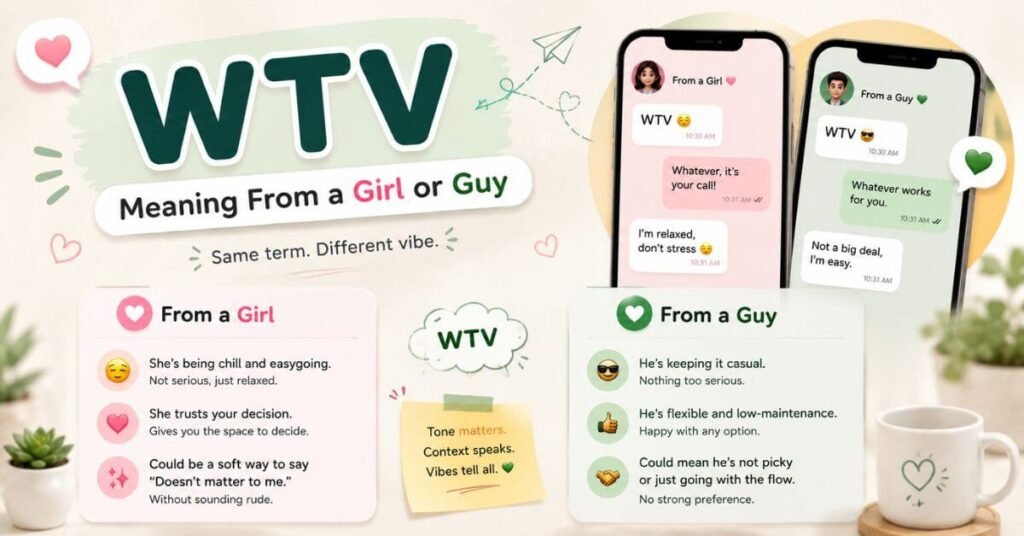
- Gender doesn’t create a fixed or different definition of WTV at all.
- Relationship context and someone’s usual texting habits matter far more.
- From either sender, WTV can mean casual flexibility or genuine indifference.
- It can also mean avoiding an argument rather than actually not caring.
- A sudden switch from long texts to “WTV” is a bigger signal than gender.
- Example: a guy replying “WTV, sounds fun” reads very differently from a flat “wtv.”
WTV on WhatsApp, Instagram, Snapchat, and TikTok
- The core meaning of WTV stays “whatever” no matter which app it’s used on.
- On WhatsApp, it appears often in personal chats and group conversations.
- On Instagram, it shows up in DMs, comments, and quick casual replies.
- On Snapchat, it fits fast, informal, back-and-forth conversations well.
- On TikTok, it’s common in comment sections and playful reply threads.
- Platform culture can shift the tone slightly, even though the meaning stays the same.
WTV in Real Text Conversations
- Neutral WTV: “Movie night?” → “WTV, I’m down for whatever you pick.”
- Friendly WTV: “Should we grab tacos or sushi?” → “WTV lol, both sound good.”
- Playful WTV: “You’re impossible.” → “WTV 😂 you love it.”
- Annoyed WTV: “Can you please be on time for once?” → “WTV.”
- Dismissive WTV: “We need to talk about this.” → “wtv man.”
- Group-chat WTV: “Who’s driving?” → “WTV, I’ll figure it out.”
How to Reply to WTV
- When it sounds neutral, respond simply: “Cool, I’ll pick then.”
- When it sounds friendly, keep the same casual energy: “Works for me.”
- When it sounds annoyed, check in gently: “Everything okay?”
- When it feels dismissive, ask directly: “Are you annoyed with me?”
- When you’re unsure, it’s fine to say: “No worries, we can decide later.”
- Matching the sender’s tone usually works better than overexplaining your reply.
Common WTV Confusions and Mistakes
- The biggest misconception: WTV doesn’t always mean “I don’t care.”
- Many people wrongly assume every short WTV reply signals anger.
- Ignoring the message before WTV often leads to reading it the wrong way.
- Overanalyzing punctuation alone can create confusion without real answers.
- Assuming gender changes the meaning is a common but inaccurate shortcut.
- Someone’s normal texting style is a far more reliable clue than the word itself.
Similar Slang and Related Abbreviations
- IDC — “I don’t care,” a more direct and sometimes stronger version.
- IDK — “I don’t know,” used for uncertainty rather than indifference.
- NVM — “never mind,” used when you want to drop the topic.
- WTW — “what’s the word” or “what’s up,” a greeting-style abbreviation.
- TBH — “to be honest,” used when sharing an honest or personal opinion.
- IMO — “in my opinion,” used to soften a personal viewpoint.
When to Use and Avoid WTV
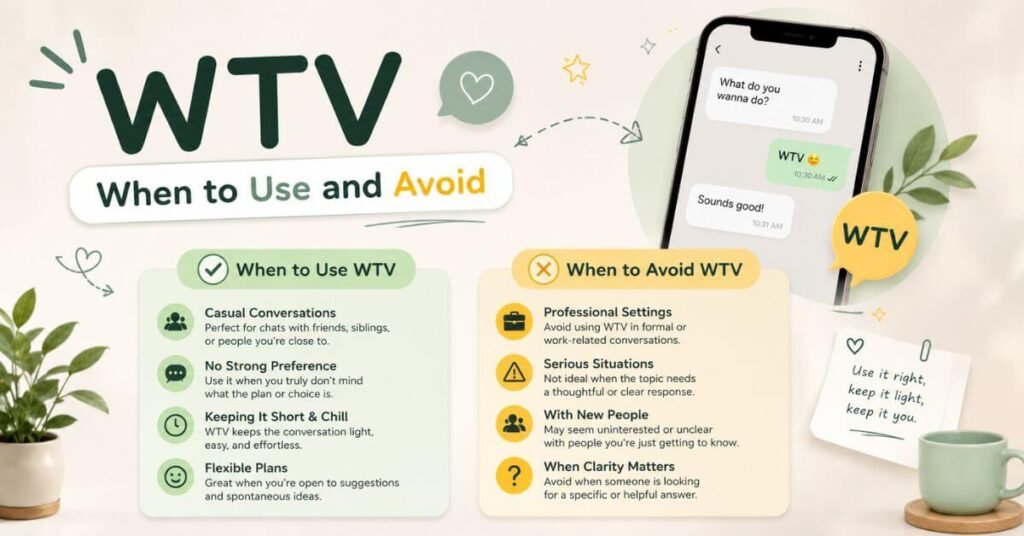
- WTV feels natural with friends, family, and casual group chats.
- It also works fine in social media DMs and relaxed gaming conversations.
- It can backfire in workplace communication or professional emails.
- It often lands poorly during serious or emotional conversations.
- For important decisions, clearer wording avoids unnecessary misreadings.
- You can also say, “Whatever works for you” or “Either option is fine with me.”
You can also learn what the blue tick means on WhatsApp and how read receipts affect message interpretation.
WTV Popularity and Modern Texting Trends
- Short abbreviations like WTV remain common in fast, casual American texting.
- Quick messaging culture favors shorthand over full, spelled-out phrases.
- Social media keeps informal abbreviations visible across generations and groups.
- Usage naturally varies depending on age, friend group, and platform.
- WTV remains widely understandable in everyday casual online communication.
- Slang keeps evolving, but familiar abbreviations like WTV tend to stick around.
My Experience With WTV in Texting
In my own texting, I used to panic whenever a friend replied with just “WTV,” assuming they were upset. Over time, I noticed it almost always matched the mood of the conversation before it — relaxed chats stayed relaxed, tense ones stayed tense. Once I started reading the messages around WTV instead of the word alone, I stopped misreading casual replies as anger.
If you’re also trying to understand other WhatsApp signals, see our guide to what last seen means on WhatsApp.
Frequently Asked Questions About WTV
What does WTV mean in text?
WTV means “whatever” in most casual conversations. It’s commonly used to express neutrality, flexibility, or sometimes mild indifference, depending on the context.
Is WTV rude?
WTV isn’t automatically rude on its own. It can sound dismissive or curt during tense or serious conversations, even when the sender doesn’t mean it that way.
What does WTV mean from a girl or guy?
Gender doesn’t change what WTV means. Relationship context, conversation history, and someone’s usual texting habits matter far more than who sent it.
How do you reply to WTV?
If it feels neutral or friendly, keep things casual with something like “cool, I’ll pick.” If it feels tense, a simple check-in like “everything okay?” usually helps.
What is the difference between WTV and IDC?
WTV means “whatever” and can carry a flexible or neutral tone. IDC means “I don’t care” and tends to sound more direct and sometimes stronger emotionally.
Conclusion
WTV usually means “whatever,” but its real meaning lives in the tone around it, not the letters themselves. It can signal flexibility, playfulness, indifference, or dismissal depending on context. When clarity actually matters, a clearer phrase beats three ambiguous letters.
One Comment