FOMO Meaning In Text: 25+ Powerful Examples And Hidden Feelings Explained
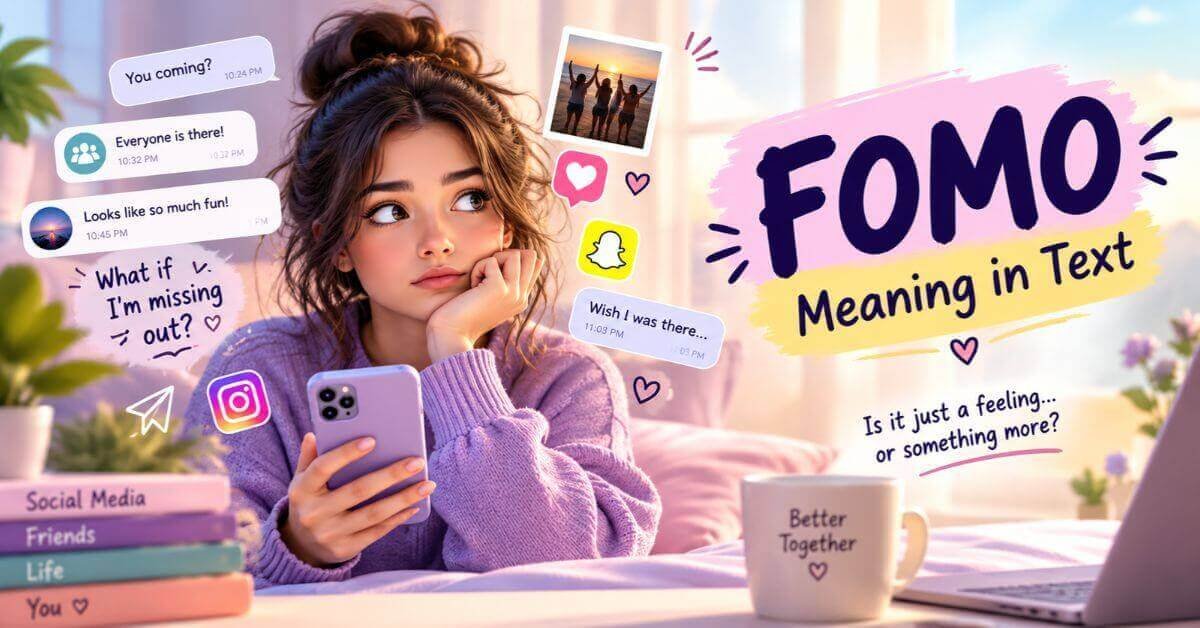
FOMO meaning in text explained with real examples, emojis, common phrases, and replies so you can understand what someone really means.
FOMO meaning in text is fear of missing out. People use it when they feel they might miss a fun event, an exciting experience, or something everyone else seems to be enjoying.
You may come across it in group chats, Instagram comments, or a friend’s message with party photos you missed. Sometimes, FOMO expresses genuine disappointment; other times, it is just a playful reaction.
Understanding the message depends on the situation and the person’s tone. Once you know how people use FOMO in everyday conversations, it becomes easier to understand the feeling behind the letters and respond naturally.
What Does FOMO Mean in Text Messages?
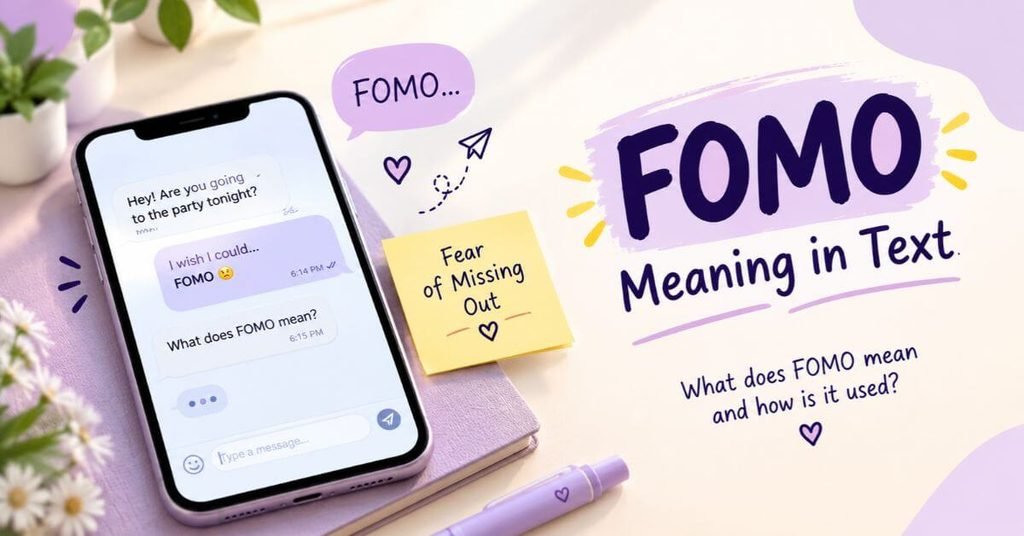
- FOMO stands for fear of missing out, a feeling that something enjoyable or important is happening without you.
- In texting, people often use it when friends make plans, share exciting photos, or discuss an event they cannot attend.
- For example, Everyone looks so happy at the concert. I’m getting FOMO! means the person wishes they could be there, too.
- FOMO can describe a passing feeling rather than serious distress; someone might use it simply to join a conversation.
- The term is common in casual messages and social media posts because it expresses a complicated feeling in just four letters.
Takeaway: FOMO usually means someone wishes they were part of an experience they are missing.
What Do Common FOMO Phrases Mean?
The words around FOMO often tell you more than the acronym itself. These are some common phrases and the meanings people usually intend.
- I have FOMO: The person feels they are missing something enjoyable, such as a friend’s birthday dinner.
- You’re giving me FOMO: Something you shared makes the other person wish they could join you; for example, a beach photo might prompt this reply.
- Major FOMO: A stronger, more dramatic way to describe missing out, often used under pictures of trips, concerts, or celebrations.
- I’m getting FOMO: The feeling is developing as the person hears about an event or sees what others are doing.
- FOMO is real: A relatable way to admit that missing out can genuinely bother you, even when you know you cannot attend.
- No FOMO here: The speaker is saying they do not feel left out, perhaps because they are enjoying a quiet evening at home.
Takeaway: Pay attention to the whole sentence. The same acronym can express mild curiosity, disappointment, or playful exaggeration.
How Is FOMO Used in Different Chats?
FOMO can appear in many online conversations, but the situation helps explain why someone uses it.
- Friends and group chats: When friends plan a dinner without you, you might text, Looks fun! Slight FOMO over here.
- Instagram and Snapchat: Someone may comment on holiday pictures with You’re giving me FOMO because they wish they were on the trip.
- TikTok: A video showing a popular trend or event may prompt FOMO when viewers feel they are missing an experience everyone is talking about.
- WhatsApp messages: Friends might use FOMO while discussing a wedding, outing, game night, or last-minute plan.
- Gaming chats: A player might mention FOMO after missing a limited-time event or a gaming session with friends.
- Everyday decisions: Someone may describe FOMO when deciding whether to attend a gathering or stay home and rest.
Takeaway: FOMO is not limited to social media. It also fits ordinary conversations about plans, hobbies, and opportunities.
Does FOMO Sound Funny, Serious, or Jealous?
FOMO does not always carry the same emotional weight. The sender’s wording, relationship with you, and situation can change how it sounds.
- Playful: FOMO! You saved me none of that cake? Can be a lighthearted way to complain about missing a treat.
- Genuinely disappointed: I wish I could have come. I’m getting FOMO seeing these photos suggests the person wanted to be there.
- A little jealous: Someone may feel envious when others have an experience they wanted, but FOMO and jealousy are not identical.
- Friendly or affectionate: A friend saying You’re giving me FOMO may simply be showing interest in what you are doing.
- Potentially serious: If someone repeatedly worries about being excluded, the feeling may be more upsetting than their casual wording suggests.
- Not necessarily a request: Saying they have FOMO does not automatically mean they expect an invitation; they may just be expressing a feeling.
Takeaway: Do not assume someone is upset or asking to be included just because they mention FOMO. Read the surrounding conversation first.
What Does FOMO Mean With Emojis?
Emojis add emotional clues, but they do not create a fixed meaning for FOMO. Interpret them alongside the message and the relationship between the people chatting.
- FOMO 😭: Often expresses dramatic disappointment or a playful feeling of missing something great.
- FOMO 😩: Can suggest frustration, longing, or wishing the person could attend.
- You’re giving me FOMO 😂: Usually, comments sound humorous rather than genuinely upset.
- Major FOMO 🥲: May communicate a mix of happiness for others and sadness about being absent.
- FOMO 💀: Often adds exaggerated humor, suggesting the situation is almost too much to watch.
- FOMO ❤️: May express affection or excitement about an experience, though its meaning depends on the conversation.
Takeaway: Emojis help show the sender’s tone, but they cannot tell you exactly how someone feels without context.
FOMO vs. Feeling Left Out, Jealousy, and JOMO
These expressions may seem similar, but each has its own meaning. Recognizing the difference helps you understand the message more clearly.
- FOMO: Worrying that you are missing an enjoyable experience or opportunity others are having.
- Feeling left out: Feeling excluded from a group or activity, whether intentionally or by accident.
- Jealousy: Feeling threatened by the possibility of losing someone’s attention, affection, or place in a relationship; it is not the same as FOMO.
- Envy: Wanting something another person has, such as a holiday, achievement, or opportunity.
- Regret: Wishing you had made a different choice, such as turning down a party and later realizing you wanted to go.
- JOMO: The joy of missing out, or feeling content with not joining an activity because staying away suits you better.
Takeaway: FOMO is about worrying you are missing something. JOMO describes feeling good about opting out, while exclusion, envy, and regret have their own meanings.
The phrase delulu meaning in text is another popular slang term whose meaning depends on the conversation.
How to Reply When Someone Says They Have FOMO
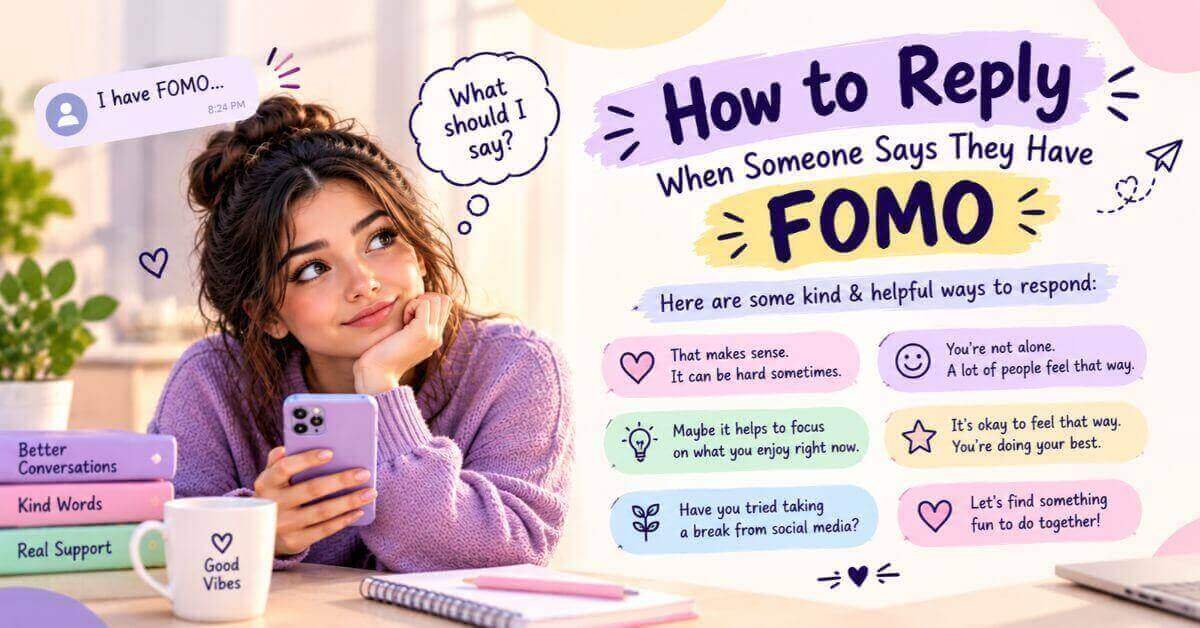
Your response should match the situation. A friend joking about your holiday photos needs a different reply from someone who genuinely wanted to attend your event.
- If they want to join: You should come next time! is friendly when another invitation is possible.
- If you can include them now: We’re still here if you want to join us makes the invitation clear without pressure.
- If they are joking: I’ll save you the best pictures 😂 keeps the exchange light.
- If they missed an event: We missed having you there! Reassures them that their presence mattered.
- If they are admiring your plans: You’d love this place! Keeps the conversation going naturally.
- If no invitation is possible: Hopefully we can do something together soon acknowledges their feelings without making a promise you cannot keep.
Takeaway: Respond to the person’s actual situation rather than assuming every FOMO message needs an invitation or a solution.
How to Use FOMO Naturally in a Text
FOMO works best in relaxed conversations where both people understand the situation. You do not need to force it into every message about missing something.
- Use I have FOMO when you wish you could attend an event or take part in an activity.
- Use you’re giving me FOMO when someone’s pictures, videos, or stories make you want to experience the same thing.
- Add a short explanation when needed, such as: I have FOMO because everyone went to the match without me.
- Keep the tone casual with friends; in formal work messages, explaining that you are concerned about missing an opportunity may be clearer.
- Avoid treating FOMO as an exact synonym for jealousy, loneliness, or social anxiety because those feelings are not interchangeable.
- Remember that context matters more than capitalization: FOMO and fomo usually communicate the same idea in ordinary texting.
Takeaway: Use FOMO when you want to express that you feel you are missing out, and let the rest of the sentence explain why.
Like FOMO, NGL meaning in text is commonly used in casual chats to express honesty or a personal opinion.
My Experience With Understanding FOMO in Text
When interpreting FOMO in everyday messages, the most useful clue is often what happened just before the person used it. A comment under holiday pictures can be playful, while a message about missing an important gathering may express genuine disappointment. The phrase itself does not reveal whether the person feels jealous, wants an invitation, or is simply joining the conversation. Looking at the surrounding words and your relationship with the sender helps avoid misunderstandings. This context-first approach makes online slang easier to understand without reading too much into a short message.
Frequently Asked Questions
What does FOMO mean when someone texts you?
FOMO means fear of missing out. The person may wish they could join an event, experience something you shared, or take part in an opportunity they think they are missing.
Is FOMO an acronym or an abbreviation?
FOMO is an acronym formed from the initial letters of fear of missing out. People commonly use it in text messages, online chats, and social media posts.
Is FOMO always a negative feeling?
No. It can express real disappointment, but people also use it jokingly or playfully. The tone and situation help you understand how seriously the person means it.
What is the opposite of FOMO?
JOMO, meaning joy of missing out, is a commonly used opposite. It describes feeling content or happy about skipping an activity instead of worrying about what you might miss.
Does FOMO mean jealousy or wanting an invitation?
Not necessarily. FOMO means worrying that you are missing an experience. A person might feel envious or hope for an invitation, but the acronym alone does not prove either.
Conclusion
The meaning of FOMO in text is fear of missing out—the feeling that you are missing an experience, event, or opportunity others are enjoying. People use it in messages, group chats, gaming conversations, and social media comments. Depending on the situation, it may express genuine feelings or simply be a joke. Pay attention to the situation, wording, and emojis before deciding what the sender means. Once you recognize common phrases such as I have FOMO and you’re giving me FOMO, you can understand and use the term naturally in everyday conversations.